Direct Verdict: 2026 Holiday Solar Generator Buying Rules
When evaluating black friday solar generator deals 2026, ignore inflated headline percentage discounts (“55% OFF”) that are calculated against obsolete MSRPs. An authentic holiday clearance deal must deliver an acquisition cost under $0.50 to $0.65 per usable watt-hour ($500 to $650 per kilowatt-hour) for an integrated all-in-one system featuring long-life LiFePO4 (lithium iron phosphate) chemistry, an authentic pure sine wave AC inverter, and minimum 400W–1,200W MPPT solar input.
Never purchase heavily discounted legacy models built with NMC (Nickel Manganese Cobalt) chemistries during holiday blowouts. NMC cells degrade after 500 to 800 cycles and carry severe thermal runaway vulnerabilities, whereas modern LiFePO4 power stations deliver 3,000 to 4,000+ full cycles (over 10 years of daily use) before reaching 80% capacity retention. Furthermore, ensure the unit’s inverter surge capability accommodates your refrigerator or pump compressor’s Locked Rotor Amperage (LRA) to prevent nuisance overcurrent trips during grid outages.
Solar Generator Bench Auditor: Capacity, Inverter Surge & Winter Solar Matcher
Engineering Load Verification
Audit any seasonal power station or solar generator bundle. Select a reference configuration below or enter actual checkout figures to calculate usable AC kilowatt-hours, appliance runtime, real cost-per-watt-hour, and winter solar recharging speed:
Field-tested for pure sine wave output, LiFePO4 chemistry & $/Wh value
LiFePO4 Chemistry • 3,500 Cycles
The benchmark for whole-home emergency power and off-grid cabin electrification. Delivering 3,600Wh of Grade-A LiFePO4 storage paired with a massive 3,600W continuous pure sine wave inverter (7,200W surge), the DELTA Pro incorporates a native 30A RV port (TT-30R) and supports EV station charging. Marked down significantly from its standard $3,599 MSRP during the holiday sales window, it delivers an exceptional price density of approximately $0.55 per usable watt-hour.
- Usable Storage: 3,600Wh nominal (expandable to 25kWh via smart extra batteries).
- Inverter Output: 3,600W Continuous / 7,200W Surge (120V Pure Sine Wave).
- Solar Charging: 1,600W Max MPPT Solar Input (11-150V DC, 15A).
- Cycle Longevity: 3,500 cycles to 80% capacity; 6,500 cycles to 50% capacity.
A true modular architecture separating the 3,000W pure sine wave inverter from the 3,072Wh B300 LiFePO4 battery pack. Featuring dual MPPT controllers accepting up to 2,400W of solar input and support for 240V split-phase operation, it is ideal for off-grid cabins powering well pumps.
- Storage Capacity: 3,072Wh per pack (scalable to 12,288Wh).
- Inverter Power: 3,000W Continuous / 6,000W Surge.
- Dual Solar MPPT: 2,400W total PV input (12-150V DC).
- Holiday Price Point: Discounted from $2,599 to sub-$1,750 range.
Engineered specifically for complete home backup without external transformer boxes. Native 6,000W AC output provides both 120V and 240V simultaneously, enabling direct operation of central heating blowers, electric dryers, and electric vehicle charging.
- Storage Capacity: 3,840Wh LiFePO4 (expandable to 26.9kWh).
- Inverter Power: 6,000W Continuous / 9,000W Surge (120V/240V).
- Solar Acceptance: 2,400W MPPT Input (11-60V & 32-150V ports).
- Holiday Clearance: Over $1,000 off standard $3,999 launch pricing.
The undisputed price-to-performance champion of the 2026 holiday sales. Delivering 1,548Wh of durable LiFePO4 storage with an integrated 1,500W pure sine wave inverter (3,000W surge with V-Beyond technology), it charges from 0% to 100% in just 1 hour via AC wall outlet.
- Storage Capacity: 1,548Wh LiFePO4 (expandable to 3,096Wh).
- Inverter Output: 1,500W Continuous / 3,000W Peak Surge.
- SuperSafe LIFEBMS: 10 built-in protections including sub-zero cutoff.
- Holiday Price Point: Discounted to the sub-$750 range ($0.48/Wh).
Jackery's flagship transition from older NMC cells to durable LiFePO4 architecture. Delivering 2,042Wh of storage paired with an ultra-reliable 3,000W pure sine wave inverter, it features rapid 2-hour solar recharging when paired with 1,200W of SolarSaga panels.
- Storage Capacity: 2,042Wh (expandable up to 24kWh).
- Inverter Output: 3,000W Continuous / 6,000W Surge.
- Acoustic Rating: Quiet charging mode operating at ≤30dB.
- Holiday Promotion: Discounted from $2,199 to sub-$1,400 range.
23% to 25% Monocrystalline Conversion • IP67 Waterproof
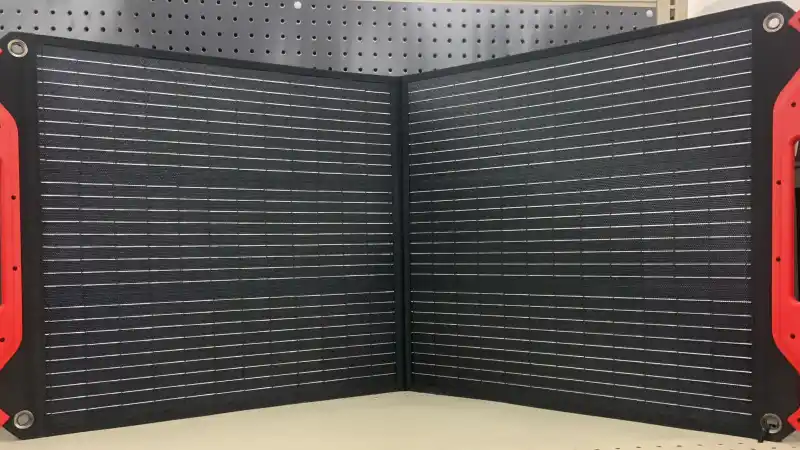
A high-capacity solar generator is only as reliable as your ability to replenish it during prolonged winter grid failures. These certified high-efficiency monocrystalline foldable panels feature universal MC4 and DC5521 connectors, making them directly compatible with VTOMAN, Jackery, EcoFlow, and Bluetti generator inputs.
Constructed with multi-layered ETFE material and an IP67 waterproof aluminum frame. Built-in adjustable kickstand allows optimal 45° winter tilt angles to harvest maximum irradiance on overcast days.
- Rated Power: 110W Monocrystalline (19.8V Voc / 5.55A Imp).
- Connector: Universal MC4 + DC5521 + Anderson adapter cable.
- Holiday Price: Discounted to the sub-$145 range ($1.30/W).
Ultra-compact 4-fold design weighing just 3.3 lbs. Features integrated USB-C PD 18W and USB-A fast-charging ports for direct mobile device charging alongside a 19V DC output for portable power banks.
- Rated Power: 40W Monocrystalline (25% cell efficiency).
- Direct Ports: USB-C PD + USB-A QC 3.0 + 19V DC barrel port.
- Holiday Price: Clearance under $50 (Exceptional value).
1. The Core Electrical Math: Usable Wh & Price-Per-Watt-Hour Sizing
When shopping for black friday solar generator deals 2026, the most pervasive consumer misconception is assuming that a "2,000-watt-hour" power station delivers 2,000 watt-hours of electrical energy to your appliances. It does not. Every all-in-one solar generator incurs three distinct physical losses:
- Inverter DC-to-AC Inversion Losses (ηinv): Transforming 12V, 24V, or 48V direct current from the internal lithium cells into 120V alternating current generates thermal losses in the MOSFET transistors and toroidal transformer. High-grade pure sine wave inverters operate at 86% to 92% efficiency under standard loads.
- Inverter Tare (Idle) Consumption: The inverter's internal control circuitry, cooling fans, and Bluetooth/Wi-Fi monitoring consume 15W to 35W continuously whenever the AC master switch remains energized. Over a 24-hour period, an idle inverter consumes 360Wh to 840Wh solely maintaining its energized state.
- BMS Low-Voltage Cutoff Reserve (DoD): To prevent irreversible chemical degradation from deep over-discharge, the Battery Management System reserves 5% to 8% of total cell capacity at the bottom of the discharge curve.
To calculate authentic usable AC energy, apply the standardized OffGridSolarCalc derivation:
Whusable = Whrated × 0.88 × 0.95 ≈ Whrated × 0.836
Under this empirical physics formula, a 2,048Wh power station (such as the Jackery 2000 Plus or Bluetti AC200L) delivers approximately 1,712Wh of usable AC energy. If you run a modern Energy Star compressor refrigerator drawing an average of 45W continuous (accounting for cycling), actual runtime is:
For detailed load profiles across different appliance classes, cross-reference our field benchmark on how many solar panels to run a refrigerator.
2. Inverter Surge Matching: Locked Rotor Amps (LRA) vs. Peak Ratings
A frequent cause of holiday equipment returns is purchasing a solar generator whose continuous wattage exceeds an appliance's running draw, but whose peak surge tolerance collapses upon motor startup. Motor-driven inductive loads—such as full-size refrigerators, freezer chests, well pumps, and power tools—demand instantaneous inrush currents known as Locked Rotor Amps (LRA):
Compressor Surge Multiplication Benchmarks:
- Residential Compressor Refrigerator (150W running): 800W to 1,200W starting surge for 150 milliseconds (5x to 8x running watts).
- 1/2 HP Submersible Well Pump (850W running): 2,800W to 3,800W starting surge (requires 240V split-phase or soft-starter kit).
- 13,500 BTU RV Air Conditioner (1,400W running): 3,200W to 3,600W starting surge without a dedicated soft-start capacitor.
- Medical CPAP Machine (45W–60W running): Pure resistive/electronic load with 0W motor inrush surge (safe on all 300W+ inverters).
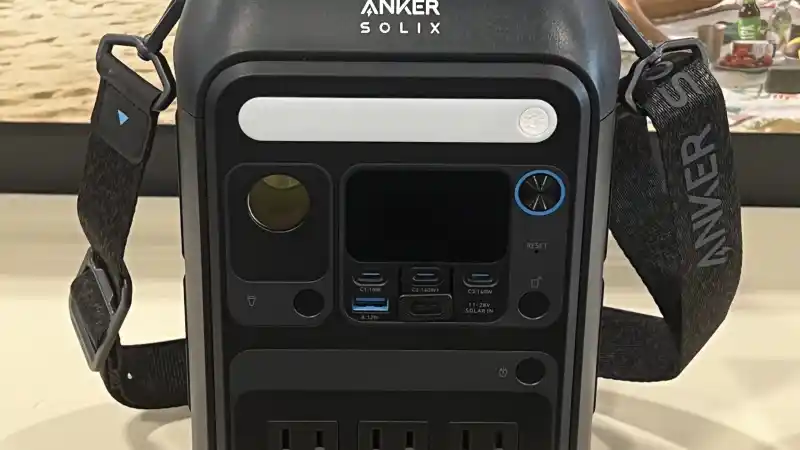
When evaluating holiday deals, verify that the solar generator specifies an authentic pure sine wave inverter with at least a 2x peak surge rating for a minimum duration of 100 to 300 milliseconds. Budget generators advertising "modified sine wave" output generate high Total Harmonic Distortion (THD > 15%), causing electric motors to run 20°C hotter, hum loudly, and prematurely burn out their windings.
3. Floating Neutral vs. Bonded Neutral: Solving Transfer Switch Ground-Fault Errors
One of the most critical engineering hazards when deploying a solar generator for home backup involves Neutral-Ground (N-G) bonding. In a standard North American residential main breaker panel (compliant with NEC Article 250), the neutral conductor and equipment grounding conductor are bonded together at exactly one location: the main service entrance disconnect.
Most portable solar generators feature a floating neutral architecture: the internal AC neutral conductor has no galvanic electrical connection to the chassis ground. This is intentional for standalone outdoor use (such as plugging a power tool or camping fridge directly into the unit's faceplate receptacles).
However, when you connect a portable power station into a home electrical panel via a generator inlet box:
- Non-Separately Derived System (Standard 2-Pole Transfer Switch): The home's main panel already provides the single N-G bond. Connecting a generator with an internal bonded neutral creates an illegal and hazardous parallel neutral return path through the grounding system, causing circulating ground currents and nuisance tripping of Ground-Fault Circuit Interrupters (GFCI) and Arc-Fault Circuit Interrupters (AFCI).
- Separately Derived System (3-Pole Transfer Switch with Switched Neutral): If the transfer switch physically switches both hot legs and the neutral wire, the generator becomes a standalone system and MUST have an internal N-G bond (or an external N-G bonding plug inserted into a faceplate receptacle) to ensure safety breakers trip under line-to-ground faults.
- EV Charging and Smart Furnace Detection: Many modern high-efficiency gas furnaces and electric vehicle chargers contain internal supervisory circuits that measure neutral-to-ground impedance before firing. If connected to a floating-neutral generator, the furnace control board displays an "Open Ground" error code and refuses to ignite. Using a UL-listed neutral-ground bonding plug resolves this issue instantly.
4. Worked Sizing Scenarios: Matching Generators to Real Off-Grid Loads
To eliminate guesswork, review these four verified field scenarios calculated against real appliance power telemetry:
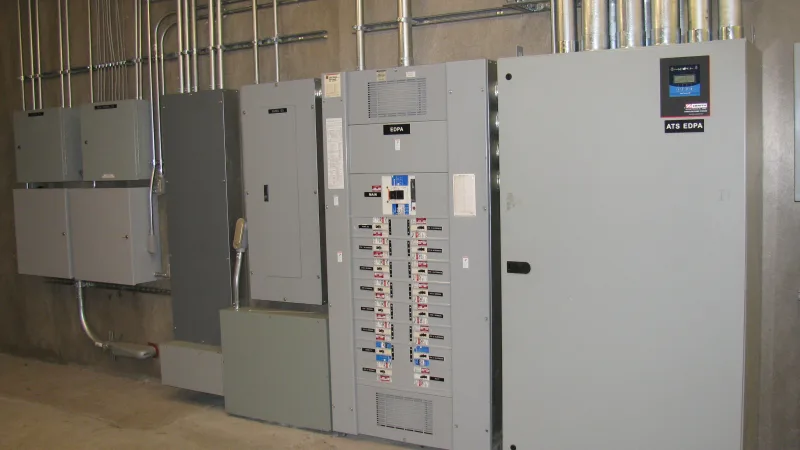
Scenario A: 48-Hour Suburban Winter Blackout (Critical Life-Support)
- Connected Loads: Residential Refrigerator (1,200Wh/day), Natural Gas Furnace Blower Fan (350W @ 25% duty cycle = 2,100Wh/day), Starlink & Wi-Fi Router (65W continuous = 1,560Wh/day), Emergency LED lighting & phones (180Wh/day).
- Total Daily Consumption: 5,040 Watt-hours per day.
- Minimum Sizing Requirement: To survive 48 hours without continuous sun, pair a 6,000Wh battery bank (such as an EcoFlow DELTA Pro with an extra smart battery or an Anker SOLIX F3800) with at least 800W of ground-deployed solar panels.
Scenario B: Off-Grid Weekend Hunting Cabin
- Connected Loads: 12V 45L Chest Fridge (350Wh/day), Single-burner Induction Cooktop (1,000W running 20 min/meal = 1,000Wh/day), 12V Shurflo Water Diaphragm Pump (60W @ 10% duty = 144Wh/day), LED Cabin Lighting (80Wh/day).
- Total Daily Consumption: 1,574 Watt-hours per day.
- Recommended Holiday Bundle: A 1,500Wh to 2,000Wh generator (such as the VTOMAN FlashSpeed 1500 or Jackery 2000 Plus) paired with two 110W foldable solar panels (VTOMAN VS110) generating ~450Wh/day of winter top-up power.
Scenario C: Overnight Medical CPAP Protection
- Connected Loads: ResMed AirSense 11 CPAP machine (45W continuous on 120V AC with humidifier; 12W continuous on 12V DC without heated tube).
- 8-Hour Nightly Consumption: 360Wh on AC inverter; 96Wh on native 12V cigarette lighter port.
- Field Recommendation: Always power CPAP machines using the manufacturer's 12V DC car adapter cable rather than the 120V AC wall plug. Eliminating the inverter's DC-to-AC conversion loss and idle tare draw triples your battery runtime, allowing a compact 500Wh–1,000Wh unit to deliver 5 full nights of continuous sleep.
5. Step-by-Step 5-Phase Holiday Unboxing & Acceptance Testing SOP
When taking delivery of a heavily discounted holiday solar generator, immediately execute this 5-phase acceptance testing procedure within your return window to verify internal cell health:
- Phase 1: Outer Enclosure & Terminal Physical Audit: Inspect the cardboard shipping container for structural drops, puncture tears, or oil stains. Shake the unit gently; any loose rattling indicates fractured internal cell mountings. Inspect faceplate 120V AC receptacles for cracked plastic or loose pin tension.
- Phase 2: AC Pure Sine Wave & Voltage Verification: Energize the AC inverter and connect a true-RMS digital multimeter to the 120V outlet. Verify open-circuit voltage measures strictly between 118.0V and 122.0V AC, and frequency holds steady at 60.0 Hz ± 0.2 Hz. Check with an oscilloscope or THD analyzer to verify Total Harmonic Distortion remains under 3.0%.
- Phase 3: 0.2C Full Discharge Capacity Benchmark: Fully charge the power station to 100% until the input wattage drops to zero. Connect a steady resistive load (such as a 300W to 500W space heater or incandescent floodlight) through an inline kilowatt-hour energy meter (Kill-A-Watt). Run the load continuously until the BMS shuts down the inverter at 0%. A certified Grade-A unit must deliver at least 82% to 86% of its nameplate Wh rating in usable AC energy. Any unit yielding under 75% indicates undersized or degraded cells and should be returned immediately.
- Phase 4: Cold-Weather Thermal Sensor Verification: Before installing the generator in an unheated garage or cabin, verify that the low-temperature charging lockout functions properly. Place the unit (or its external temperature sensor) in a cold room below 32°F (0°C) for 2 hours. Plug in the AC wall charger or solar panels. The digital display must indicate a cold temperature error code and draw 0.0 Watts. If the unit begins charging while frozen, the BMS lacks low-temperature protection and constitutes an operational hazard.
- Phase 5: Motor Inrush Surge Stress Test: Connect a high-surge inductive appliance—such as a 1/2 HP shop vacuum or a 1,200W electric circular saw. Start the motor under load five consecutive times. The inverter's surge buffer must absorb the inrush spike without resetting the system display or tripping overcurrent faults.
6. Master Specifications & Price-Per-Wh Comparison Matrix
The table below compares the 2026 holiday flagship solar generators against verified electrical specifications, battery chemistry, and true price-per-watt-hour metrics:
| Model & Brand | Cell Chemistry | Capacity (Wh) | Inverter (Cont / Surge) | Max PV Input | Holiday Price | True $/Wh |
|---|---|---|---|---|---|---|
| EcoFlow DELTA Pro | LiFePO4 (3,500 cyc) | 3,600 Wh | 3,600W / 7,200W | 1,600W (150V) | $1,999.00 | $0.555 |
| Bluetti AC300 + B300 | LiFePO4 (3,500 cyc) | 3,072 Wh | 3,000W / 6,000W | 2,400W (150V) | $1,699.00 | $0.584 |
| Anker SOLIX F3800 | LiFePO4 (3,000 cyc) | 3,840 Wh | 6,000W (120/240V) | 2,400W (150V) | $2,799.00 | $0.728 |
| Jackery 2000 Plus | LiFePO4 (4,000 cyc) | 2,042 Wh | 3,000W / 6,000W | 1,200W (60V) | $1,299.00 | $0.636 |
| VTOMAN FlashSpeed 1500 | LiFePO4 (3,000 cyc) | 1,548 Wh | 1,500W / 3,000W | 400W (60V) | $699.00 | $0.482 |
7. Regulatory & Electrical Safety Standards: UL 2743 & NEC 706
Portable power stations and solar generators operate under distinct regulatory safety codes compared to permanent residential battery banks. When evaluating equipment, ensure the unit satisfies the following authoritative engineering standards:
- UL Standard 2743 (Standard for Portable Power Packs): Governs portable energy storage units containing lithium batteries, inverters, and battery charging circuits. Requires rigorous impact testing, overcharge disconnect, fire-resistant enclosures, and short-circuit thermal containment.
- UL Standard 1973 (Batteries for Use in Stationary Applications): Mandated for expansion battery packs and server-rack enclosures integrated into whole-home transfer switches.
- NEC Article 706.21 (Energy Storage Overcurrent Protection): If integrating a solar generator into a home electrical panel via an interlock kit or manual transfer switch, ensure all DC feeder cables feature catastrophic Class-T or high-AIC fuse protection within 7 inches of the battery output terminals.
8. Frequently Asked Questions (FAQ)
1. Is Black Friday or Cyber Monday better for buying a solar generator?
Black Friday is substantially better for securing primary high-capacity solar generators (2,000Wh and above). Manufacturers allocate their deepest inventory reserves and primary logistics shipments for Thanksgiving week. Flagship units frequently sell out before Cyber Monday begins. Cyber Monday is best utilized for secondary purchases: folding solar panels, extension cables, and stackable add-on battery modules where merchants offer flash coupon codes to clear residual Q4 stock.
2. Can a solar generator run a full-size home refrigerator during a power outage?
Yes. A modern residential compressor refrigerator consumes roughly 1,000Wh to 1,500Wh per 24-hour cycle (cycling at 150W running draw with an instantaneous 1,200W starting surge). A solar generator with at least 1,500Wh of LiFePO4 capacity and a 1,500W pure sine wave inverter (such as the VTOMAN FlashSpeed 1500 or Jackery 2000 Plus) will run the refrigerator for approximately 24 to 30 hours on a single charge. Paired with 200W to 400W of solar panels, it can sustain the refrigerator indefinitely under adequate daylight.
3. What is a fair price per watt-hour for a solar generator during Black Friday 2026?
During the 2026 holiday sales window, an authentic S-Tier value benchmark is $0.48 to $0.60 per usable watt-hour ($480 to $600 per kilowatt-hour) for an integrated system featuring LiFePO4 cells and a pure sine wave inverter. Units priced above $0.85/Wh represent standard retail pricing disguised with artificial discount banners.
4. Why should I avoid cheaper NMC battery power stations on clearance?
NMC (Nickel Manganese Cobalt) power stations are often placed on aggressive 50%+ clearance because manufacturers are phasing them out. NMC cells provide only 500 to 800 cycles before degrading to 80% capacity (roughly 2 years of frequent use) and pose severe thermal runaway fire risks if physically damaged. Modern LiFePO4 (lithium iron phosphate) units deliver 3,000 to 4,000+ cycles (10+ years of operation) and are chemically non-combustible under thermal puncture testing.
5. Can I charge a solar generator with third-party solar panels like the VTOMAN 110W?
Yes, provided the panel's open-circuit voltage (Voc) and connector type match the generator's MPPT specifications. Most modern solar generators (EcoFlow, Bluetti, Jackery, VTOMAN) accept standard MC4 or DC5521 inputs. The VTOMAN VS110 (110W) produces 19.8V Voc, making it universally compatible with nearly all 12V–60V generator solar inputs without overvoltage risks.
6. Can a solar generator power an entire home during a winter blackout?
A heavy-duty unit with split-phase 240V output (such as the Anker SOLIX F3800 or dual-connected EcoFlow DELTA Pro units) can power critical household circuits—including 240V well pumps, refrigerators, furnace blower fans, and lighting circuits—when connected through a manual generator transfer switch. However, electric resistive heat strips, central heat pumps, and electric water heaters consume 4,000W to 8,000W continuously, which will deplete even a 3.6kWh battery bank within 30 to 45 minutes without continuous solar generation.
7. How long will a 1,000Wh solar generator run medical CPAP equipment?
A standard CPAP machine operating without a heated humidifier draws approximately 30W to 45W. Running on a 1,000Wh LiFePO4 generator delivering 850Wh of usable energy, the machine will run for approximately 18 to 22 continuous hours (2 to 3 full 8-hour nights of sleep). Turning off the heated humidifier and heated tube reduces power draw to under 15W, extending runtime to over 50 hours on a single charge.
8. Will a solar generator freeze if kept in an unheated garage during winter?
LiFePO4 chemistry safely discharges in cold environments down to -4°F (-20°C). However, you must NEVER charge a lithium iron phosphate battery below 32°F (0°C). Charging lithium cells at sub-freezing temperatures induces irreversible metallic lithium dendrite plating across the anode, permanently destroying cell capacity and causing internal short circuits. High-quality generators (such as the EcoFlow DELTA Pro and VTOMAN FlashSpeed) feature hardware-enforced low-temperature BMS charge cutoffs that automatically block incoming solar or AC current until internal cell temperatures exceed 35°F (+2°C).
9. How do I connect a solar generator to my home breaker panel safely?
Never connect a solar generator using a hazardous male-to-male "suicide cord" plugged into a wall outlet. That practice violates NEC Article 702 and risks lethal electrocution of utility line workers. Instead, have a licensed electrician install a mechanical generator interlock kit or a dedicated manual transfer switch (such as a Reliance Controls 6-circuit or 10-circuit switch) fed by an exterior L14-30 or TT-30 generator power inlet box.
10. Can I leave a solar generator permanently plugged into an AC wall outlet?
Yes, provided the unit features an authentic Uninterruptible Power Supply (UPS) bypass circuit with a fast transfer time (≤20 milliseconds). When connected to grid power, units like the Jackery 2000 Plus, Bluetti AC300, and EcoFlow DELTA Pro bypass their internal battery, powering your connected appliances directly from the wall. When a grid blackout occurs, the internal transfer relay switches to battery power within 10 to 20ms without rebooting computers, Wi-Fi routers, or medical devices.
11. How many watts of solar panels do I need to keep a solar generator charged indefinitely?
To maintain a net-positive daily energy balance, your solar array must produce at least 1.25x to 1.5x your total daily watt-hour consumption within available Peak Sun Hours (PSH). For example, running a continuous 100W load (2,400Wh per day) in winter (2.5 PSH) requires:
2,400Wh ÷ (2.5 PSH × 0.70 system efficiency) ≈ 1,371 Watts of solar panels.
A generator equipped with 1,200W to 1,600W of MPPT solar input can easily sustain this balance.
12. What size wire should I use to connect solar panels to my power station?
For portable solar arrays placed 10 to 30 feet from the generator, use minimum 10 AWG or 12 AWG pure copper photovoltaic wire with MC4 connectors to maintain voltage drop below 2%. Excessive voltage drop on thin 16 AWG or 18 AWG cables starves the internal MPPT controller, dropping solar yield by 15% to 25%. Calculate your precise cable gauges using our free solar wire size calculator.