Direct Engineering Answer: Choosing between flexible vs rigid solar panels comes down to durability versus form factor. Rigid glass panels deliver 25-year lifespans, superior airflow cooling, and lower cost per watt. Flexible panels offer 70% weight savings and low-profile mounting for curved roofs, but suffer severe heat derating and degrade within 3 to 5 years.
Engineering Verdict: When evaluating flexible vs rigid solar panels for mobile platforms, rigid glass modules mounted with a 1-inch ventilation air gap generate up to 22% more daily kilowatt-hours in summer heat and withstand 20+ years of highway wind shear, whereas flexible panels should be strictly reserved for weight-critical canvas pop-tops or curved fiberglass roofs.
1. Technical Durability & Performance Analysis: Flexible vs Rigid Solar Panels
Most generic van-life blogs market flexible solar panels as the ultimate modern upgrade because they are ultra-thin and lightweight. However, field data from thousands of mobile off-grid installations reveals severe long-term thermal and mechanical failure rates. The comparative matrix below highlights the engineering realities that promotional marketing brochures omit:
| Performance & Engineering Metric | Generic Marketing Claim | Real-World Field Failure Mode | Engineering Testing Standard | OffGridSolarCalc Technical Verdict |
|---|---|---|---|---|
| Operating Cell Temperature | “Aerodynamic flush mount cools faster via vehicle roof contact.” | Direct roof adhesion traps conductive heat; cell temperatures exceed 75°C (167°F), triggering severe voltage drop. | IEC 61215 NMOT (Nominal Module Operating Temperature) | Rigid panels with 1-inch elevated Z-brackets run 15°C to 20°C cooler due to convective chimney airflow beneath glass. |
| Mechanical Vibration & Flexing | “Flexible construction absorbs road shocks and vibration better.” | Continuous highway buffeting and roof vibration create microscopic silicon wafer fractures, permanently killing cell output. | IEC 62782 (Dynamic Mechanical Load Testing) | Tempered 3.2mm low-iron glass and rigid aluminum frames protect fragile silicon cells from bending fatigue indefinitely. |
| Protective Top Encapsulation | “Tough scratch-resistant polymer plastic coating.” | PET plastic clouds and yellows from UV exposure; cheap plastic delaminates, allowing moisture into internal silver bus ribbons. | ASTM G154 (Accelerated UV Weathering Testing) | Tempered glass provides 100% UV resistance and zero moisture ingress. If choosing flexible, specify Japanese ETFE polymers only. |
| Mounting Hardware & Roof Safety | “Just glue them directly down with double-sided tape.” | VHB tape bonds tear vehicle paint or fiberglass gel-coat during thermal expansion; panels lift off at 70 mph highway speeds. | ASTM D1002 (Lap Shear Adhesion Standards) | Rigid panels bolted through structural crossbars or marine Sikaflex-backed aluminum corner brackets guarantee highway retention. |
| Economic Lifecycle Value | “Flexible panels are cheaper to ship and install.” | Must be completely stripped and replaced every 3 to 5 years, quadrupling total cost of ownership per kilowatt-hour. | LCOE (Levelized Cost of Energy Amortization) | Rigid panels cost 50% less per watt initially ($0.75/W vs $1.80/W) and last 25+ years, delivering 6× higher lifetime return. |
2. Anatomical Comparison: How Flexible and Rigid Solar Panels Are Built
To understand why flexible vs rigid solar panels behave so differently under real-world weather, you must look beneath their surface layers:

1. Flexible Solar Panel Architecture
A standard flexible solar panel consists of paper-thin monocrystalline silicon wafers (typically 150 to 180 micrometers thick) sandwiched between flexible polymer layers:
- Top Sheet (Front Layer): In premium modules, this is an ETFE (Ethylene Tetrafluoroethylene) fluoropolymer film with a textured honeycomb surface to reduce glare. In cheap budget modules, manufacturers use inferior PET (Polyethylene Terephthalate) plastic, which degrades and turns hazy after 18 months of intense UV exposure.
- Encapsulant: Thin sheets of EVA (Ethylene Vinyl Acetate) that melt during lamination to seal the silicon cells.
- Backing Substrate: A thin fiberglass sheet (PCB composite), thin aluminum foil, or plastic backsheet measuring barely 1.5mm to 3mm in total thickness.
- Total Weight: Approximately 3.5 to 5.0 lbs (1.6 to 2.3 kg) per 100-watt panel.
2. Rigid Solar Panel Architecture
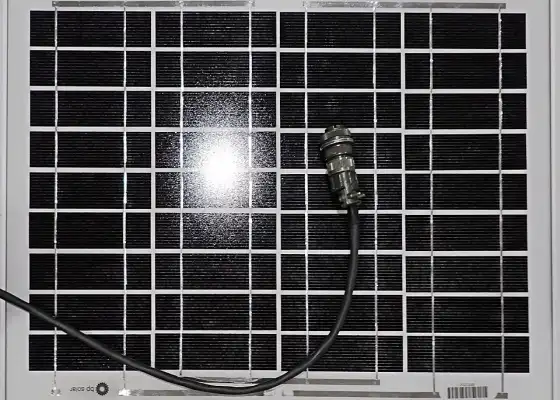
A traditional rigid solar panel utilizes heavy-duty materials designed for permanent architectural exposure:
- Front Glazing: 3.2mm high-transmission, low-iron tempered glass capable of withstanding 1-inch hailstones striking at 52 mph (84 km/h) under UL 1703 standards.
- Structural Perimeter Frame: Extruded, anodized aluminum alloy (typically 30mm to 35mm profile depth) providing immense torsional stiffness against highway wind buffeting.
- Encapsulant & Backsheet: Multi-layer Tedlar/PET/PVDF backsheet providing an impermeable vapor barrier.
- Total Weight: Approximately 16 to 22 lbs (7.2 to 10.0 kg) per 100-watt panel.
3. Heat Degradation Physics: Flexible vs Rigid Solar Panels Under Summer Sun
The single greatest engineering weakness of flexible solar panels is their thermal environment. A fundamental law of semiconductor physics states that as photovoltaic solar cells get hotter, their electrical voltage drops dramatically.
The Temperature Coefficient of Pmax (γ)
Solar panels are rated at Standard Test Conditions (STC): an irradiance of 1,000 W/m² and a cell temperature of exactly 25°C (77°F). For every degree Celsius the silicon cell heats up above 25°C, power output decreases according to the module’s temperature coefficient of maximum power (γ), typically -0.35% to -0.40% per °C for monocrystalline silicon.
The Convective Airflow Cooling Gap
When you install rigid solar panels on an RV roof using aluminum Z-brackets, you elevate the modules 1.0 to 1.5 inches above the roof surface. As sunshine beats down, heated air beneath the panels naturally rises and escapes through the sides, drawing cooler ambient air underneath in a continuous thermal chimney effect. When driving, highway airflow aggressively cools the rear of the panel.
In contrast, when you glue a flexible solar panel directly to a vehicle roof with Sikaflex or VHB tape, there is zero air gap. The panel transfers its heat directly into the vehicle roof insulation, while the metal or fiberglass roof radiates thermal energy right back into the panel.
| Operating Scenario (35°C / 95°F Ambient Day) | Rigid Panel on 1.25″ Z-Brackets | Flexible Panel Glued Flush to Roof | Real-World Performance Penalty |
|---|---|---|---|
| Internal Cell Temperature | 55°C (131°F) | 75°C (167°F) | Flexible runs 20°C hotter |
| Temperature Differential (ΔT above 25°C) | +30°C | +50°C | +20°C additional thermal stress |
| Power Loss from Heat (γ = -0.38%/°C) | -11.4% | -19.0% | Flexible loses an extra 7.6% pure wattage |
| Actual Output from 400W Array | 354.4 Watts | 324.0 Watts | Loss of 30.4 Watts continuous generation |
| Cumulative Daily Harvest (5 Peak Sun Hours) | 1,772 Watt-hours | 1,520 Watt-hours | Rigid delivers ~16.5% more daily energy |
Over an entire sunny summer season, that 16% to 22% thermal generation deficit means your house battery bank charges significantly slower. (To see how battery recharge times vary by solar harvest, explore our off-grid solar calculator or calculate dual-charging rates in our DC to DC charger with solar wiring guide).
4. Mechanical Failure Modes: Why Flexible Panels Fail in 3 to 5 Years
While thermal losses reduce efficiency, mechanical failure destroys the panel entirely. In mobile overland builds, flexible panels suffer from three fatal degradation mechanisms:
1. Micro-Fractures in Silicon Wafers
Monocrystalline silicon is a brittle crystalline rock, chemically similar to glass. When you bend a flexible solar panel across a curved van roof, or when 70 mph highway headwinds cause the thin panel to flutter against the roof, the internal silicon wafers experience extreme cyclical shear stress.
These microscopic stress cracks sever internal conductive silver finger traces. Initially invisible to the naked eye, these broken traces isolate large sections of the cell. Under an electroluminescence (EL) camera, a 2-year-old flexible panel often resembles a shattered spiderweb, with 30% to 50% of the active cell area dead!
2. Localized Hotspots & Polymer Melting
When cell micro-cracks or partial shading isolate a portion of a series-connected circuit, the unshaded cells continue forcing full string current through the damaged area. The damaged cell reverses polarity and behaves as an electrical resistor, dissipating power as intense localized heat. In rigid glass panels, thick glass conducts this heat away safely. In flexible panels, localized temperatures can exceed 120°C (248°F), melting the polymer encapsulant, causing brown scorch marks, and in worst-case scenarios, burning through campervan fiberglass roofs!
3. Plastic Clouding, Yellowing & Delamination
Glass is chemically inert; it will remain crystal-clear after 40 years of direct solar UV radiation. Plastic polymers, however, suffer photochemical chain scission under ultraviolet rays. Cheap PET flexible panels turn yellow and hazy within 18 months, reducing light transmittance by up to 25%. Furthermore, daily thermal expansion cycles cause the plastic front sheet to delaminate from the backing layer, creating air bubbles that trap morning dew and corrode internal busbars.
5. Weight, Aerodynamics & Vehicle Fuel Economy: The Real Math
The strongest argument for flexible panels is weight reduction. Let us calculate the true real-world impact for a typical 400-watt campervan solar array:
| System Component (400W Total Array) | Rigid Glass Array (4 × 100W Panels) | Flexible Array (4 × 100W Panels) | Engineering Difference |
|---|---|---|---|
| Bare Panel Weight | 72.0 lbs (32.6 kg) | 16.0 lbs (7.2 kg) | Flexible saves 56.0 lbs (25.4 kg) |
| Mounting Hardware Weight | 12.0 lbs (aluminum Z-brackets & bolts) | 2.5 lbs (VHB tape or adhesive sealant) | Flexible saves 9.5 lbs (4.3 kg) |
| Total Installed Roof Weight | 84.0 lbs (38.1 kg) | 18.5 lbs (8.4 kg) | Net savings: 65.5 lbs (29.7 kg) |
| Profile Height Above Roof | 1.75 inches (44.5 mm) | 0.15 inches (3.8 mm) | Flexible sits 1.6 inches lower |
Does That 65-Pound Weight Savings Matter?
On a campervan with a Gross Vehicle Weight Rating (GVWR) of 8,500 to 9,500 lbs (such as a Ford Transit, Mercedes Sprinter, or Ram ProMaster), an 84-pound rigid solar array represents less than 0.9% of the vehicle’s total weight. The difference in vehicle handling and center of gravity is completely undetectable.
When Weight DOES Matter: Flexible panels are invaluable for vehicles with strictly limited roof payload capacities:
- Pop-Top Campervans (Westfalia, Sportsmobile): Gas struts that elevate a manual pop-top roof are calibrated for specific lifting weights. Adding 80 lbs of rigid glass makes popping the roof exhausting or dangerous.
- Curved Fiberglass Teardrop Trailers: Teardrop roofs lack internal steel crossbars; screwing in rigid brackets risks cracking the fiberglass shell.
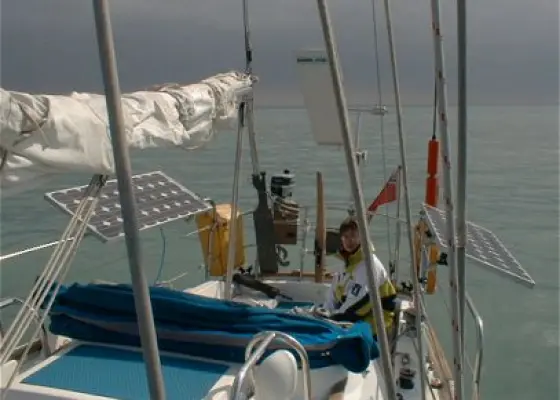
- Marine Bimini Canvas: Sailboat fabric biminis cannot support rigid glass frames without custom stainless-steel arch fabrication.
The Highway Aerodynamics & Wind Noise Factor
A flush-mounted flexible solar panel produces zero wind whistle and has virtually zero aerodynamic drag coefficient (Cd). Rigid panels elevated 1.5 inches above a roof can generate slight highway wind buffeting and noise if mounted without an aerodynamic wind deflector. However, installing a simple $45 acrylic or aluminum front wind fairing eliminates 95% of turbulence, reducing the highway fuel penalty to less than 0.1 miles per gallon! (For layout planning on compact vehicle roofs, review our guides on van life solar planning and Class B RV solar installations).
6. Safe Mounting Techniques: How to Install Both Panel Types Correctly
Incorrect mounting destroys both types of modules. Follow these verified installation procedures:
How to Mount Rigid Solar Panels (The Airflow Rule)
- Use Quality Aluminum Z-Brackets: Fasten anodized aluminum Z-brackets to the panel pre-drilled frame holes using stainless-steel 1/4-20 hardware with nylon locking nuts.
- Roof Attachment Options:
- Roof Rack Rails (Best Practice): Bolt the Z-brackets directly to 80/20 extruded aluminum roof rack crossbars. This eliminates drilling any penetrations into your vehicle roof sheet metal.
- Direct Roof Adhesion (Drill-Free): Clean the vehicle paint thoroughly with isopropyl alcohol. Bed heavy-duty ABS plastic mounting corner brackets using Sikaflex 252 or 291 polyurethane adhesive. Sikaflex has a lap shear strength exceeding 400 PSI, securing panels safely at 80 mph.
- Mechanical Screws with Dicor: If screwing into van roof ribs, use stainless-steel self-tapping screws with rubber-backed washers, and completely encapsulate each screw head with self-leveling Dicor lap sealant.
- Grounding the Frames: Ensure your rigid panel aluminum frames are electrically bonded to equipment ground per NEC 690.43 (learn the complete wiring protocol in our guide on how to ground an off-grid solar system).
How to Mount Flexible Solar Panels (Preventing Thermal Death)
If your build requires flexible panels, never glue them directly to bare metal or dark vehicle paint! Use the Twin-Wall Corrugated Plastic Substrate Technique:
- Cut a sheet of 4mm or 6mm twin-wall corrugated polycarbonate (Coroplast) to match the exact footprint of your flexible panel.
- Adhere the flexible panel to the top surface of the Coroplast using 3M VHB 4991 heavy-duty tape.
- Adhere the bottom of the Coroplast to your vehicle roof, orienting the internal flutes (channels) from front to back.
- When driving or parked in a breeze, air circulates through the corrugated channels, providing a crucial thermal boundary layer that lowers cell operating temperatures by 10°C to 15°C!
7. Sizing & Electrical Architecture: Series vs Parallel for Mobile Arrays
Because vehicle roofs suffer from intermittent shading from roof vents, air conditioners, cell antennas, and roadside trees, electrical string architecture is vital.
Rigid Arrays: With rigid panels, bypass diodes inside their heavy junction boxes work exceptionally well. Wiring rigid panels in series (e.g., two 100W panels in series to create a 40V Voc string) enables your MPPT charge controller to operate at peak efficiency and reduces roof cable thickness (see our fundamentals on wiring solar panels in series vs parallel).
Flexible Arrays: Flexible panels typically feature miniature junction boxes with tiny surface-mount Schottky diodes that easily overheat and fail under sustained shading. If you wire flexible panels in series and one panel is partially shaded by an RV air conditioner, the entire string’s amperage collapses. For flexible panels on crowded van roofs, parallel wiring with an MPPT controller is significantly safer and more resilient.
To simulate how shading, ambient temperature, and panel tilt angle impact battery state-of-charge throughout the year, test your mobile power setup in our interactive Solar Lab Simulator.
8. Step-by-Step Decision Framework: Flexible vs Rigid Solar Panels for Your Build
Use this engineering checklist to select the optimal solar panel technology for your mobile off-grid rig:
| Vehicle Type / Application | Recommended Technology | Primary Technical Justification |
|---|---|---|
| Standard Cargo Van (Sprinter, Transit, ProMaster) | Rigid Glass Panels | Roof has ample weight capacity; 1.5″ elevated air gap prevents summer heat degradation; 25-year lifespan. |
| Class A / C Motorhome & 5th Wheels | Rigid Glass Panels | Flat TPO/EPDM rubber roofs accommodate Z-brackets easily; maximum watts per square foot required for heavy domestic loads. |
| Pop-Top Camper (Westfalia, Ursa Minor) | Flexible ETFE Panels | Roof lifting gas struts cannot handle 80+ lbs of glass; flush profile fits beneath standard 7-foot garage doors. |
| Teardrop / Small Fiberglass Trailer | Flexible ETFE Panels | Compound curved roofs prevent flat glass mounting without heavy custom metal fabrication. |
| Sailboat / Marine Bimini Canvas | Flexible ETFE Panels | Panels can be zippered or velcroed directly to Sunbrella fabric biminis without rigid metal framing. |
| Extreme Overlanding / Off-Road Rigs | Rigid Glass Panels | Low-hanging tree branches will scrape, gouge, and puncture soft flexible plastic panels; tempered glass deflects impacts. |
9. Frequently Asked Questions (FAQ)
Can you walk on flexible solar panels?
Manufacturers of marine-grade flexible panels claim you can walk on them with soft-soled deck shoes. However, electrical engineers strongly advise against it. Walking on flexible panels bends the microscopic silicon wafers, creating internal micro-fractures that permanently reduce power output and cause localized thermal hotspots.
How long do flexible solar panels really last on an RV?
In real-world mobile overland applications, flexible solar panels typically last 3 to 5 years before suffering severe power degradation (dropping below 70% rated output), plastic clouding, or junction box failure. High-end Japanese ETFE panels can reach 5 to 7 years, whereas rigid glass panels regularly operate for 25 to 30 years.
Do flexible solar panels damage vehicle roof paint?
Yes, if adhered directly with high-strength adhesives like 3M VHB tape or Sikaflex without a backing substrate. Thermal expansion cycles between the hot panel and the vehicle sheet metal can shear paint layers, and removing a failed glued panel often pulls paint down to bare steel or tears fiberglass gel-coat.
Are rigid solar panels noisy on the highway?
Rigid panels elevated on Z-brackets can create minor aerodynamic wind turbulence or whistling at speeds above 65 mph. Installing an inexpensive acrylic front wind fairing or mounting panels flush with a roof rack crossbar eliminates virtually all wind noise.