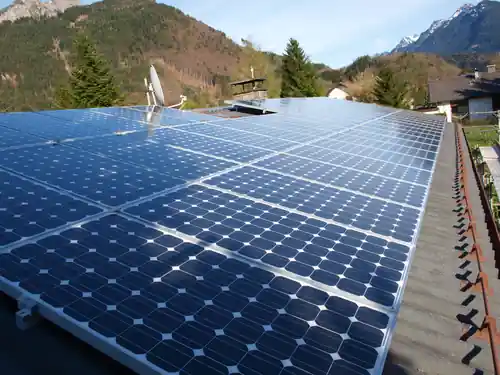
To learn how to clean solar panels safely, wash arrays during early dawn or late evening when glass is cool. Use deionized or distilled water under 100 ppm total dissolved solids with a non-abrasive microfiber or horsehair brush. Never use high-pressure washers, abrasive powders, or cold water on hot afternoon glass.
Systematic solar panel maintenance balances optical particulate removal against the severe mechanical hazards of thermal shock glass shattering, anti-reflective coating delamination, and sub-surface silicon micro-cracking.
When an off-grid solar array shows declining midday output, the instinct for many owners is to grab a garden hose and spray down the dusty glass under full sun. However, reviewing photovoltaic warranty claims and manufacturer engineering bulletins reveals that improper washing causes vastly more catastrophic module failures than ambient dust accumulation ever does. Spraying 55°F (13°C) municipal or well water onto solar glass operating at 145°F to 160°F (63°C–71°C) induces sudden thermal shock: the severe differential contraction gradient generates instantaneous tensile stresses exceeding 45 MPa, shattering the 3.2 mm tempered glass or inducing invisible silicon wafer micro-cracks that void IEC 61215 manufacturer warranties on the spot.
Equally destructive is using hard mineral tap water that bakes calcium carbonate scale permanently into anti-reflective coatings, or scouring delicate edge seals with high-pressure washers. Knowing exactly how to clean solar panels requires shifting away from aggressive residential cleaning habits toward a controlled thermodynamic workflow: assessing true particulate soiling losses against ambient irradiance, verifying water purity thresholds (below 100 ppm TDS), and timing washes exclusively during low-thermal-gradient periods at dawn or dusk.
Interactive Sizing & Maintenance Suite
Calculate array energy production baselines using our comprehensive Off-Grid Solar System Sizing Calculator and verify string voltage margins with our browser-based Solar Lab Simulation Tool.
1. Physics of Photovoltaic Soiling: Particulate Deposition & Optical Loss
Photovoltaic soiling is governed by the physical interaction between atmospheric aerosols and the exterior boundary layer of the solar panel glass. As air currents pass over an array, particulate matter settles through a combination of dry gravitational sedimentation, turbulent impaction, and electrostatic attraction. Over time, these microscopic particles build a physical layer characterized by specific optical transmission properties.
The Mathematical Beer-Lambert Attenuation Model
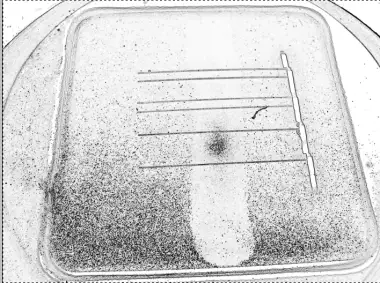
The reduction in solar photon transmission through an accumulated soiling layer can be mathematically modeled using an adaptation of the Beer-Lambert Law of optical extinction:
Where:
- I_0(λ): Incident spectral solar irradiance at wavelength λ (Watts per square meter per nanometer).
- σ_ext(λ): Specific spectral extinction coefficient of the particulate mix, combining optical scattering and absorption cross-sections.
- ρ_soiling: Surface mass density of accumulated particulates (measured in grams per square meter, g/m²).
In practical field measurements, particulate mass density between 2 g/m² and 5 g/m² results in an aggregate optical transmission reduction of 8% to 18%. Because silicon solar cells respond primarily across the 400 nm to 1,100 nm spectral band, fine mineral particulates (such as red clay or desert silica with grain sizes below 10 micrometers) are particularly destructive. These fine grains exhibit high refractive indices that induce significant Rayleigh and Mie scattering, converting direct beam solar radiation into diffuse, unharvestable scatter.
Non-Uniform Soiling and Localized Hot-Spot Formation
Uniform dust deposition causes a linear, predictable drop in array short-circuit current (Isc). In contrast, when analyzing how to clean solar panels, non-uniform soiling—such as localized bird droppings, fallen leaves, or accumulated dirt dams along the bottom aluminum frame edge—introduces severe electrical hazards.
When a single cell or a small cluster of cells within a series string is shaded by localized soiling, its photogenerated current drops toward zero. However, the remaining fully illuminated cells in that series string continue forcing high electrical current through the circuit. Because the shaded cell cannot conduct this forced current in the forward direction, it is driven into reverse bias breakdown. The shaded cell ceases generating power and begins dissipating the entire string’s energy as intense, localized resistive thermal heat (P = I2 × Rshunt).
This phenomenon, known as hot-spot heating, can cause localized temperatures to surge past 150°C (302°F). Prolonged hot-spot exposure causes irreversible ethylene vinyl acetate (EVA) encapsulant browning, backsheet delamination, solder joint fatigue, and internal bypass diode destruction. Regular washing eliminates these localized current bottlenecks, protecting system longevity as outlined in our diagnostic guide on how to test solar panels with a multimeter.
2. Solar Panel Washing Methods: 5-Column Technical Comparison & Practical Field Analysis
Homeowners and commercial off-grid operators employ wildly varying cleaning methods. The comparative matrix below debunks common DIY washing myths and provides actionable clarity missing from generic advice by evaluating the chemical, mechanical, and economic parameters of the primary cleaning approaches.
| Cleaning Methodology | Water TDS & Chemistry | AR Coating Safety Risk | Labor & Equipment Cost | Annual Energy Yield Impact |
|---|---|---|---|---|
| Tap Water & Dish Soap | High TDS (>250 ppm), alkaline phosphates | Severe (Leaves sticky film, rapid caliche bonding) | Very Low ($10 DIY) | Negative long-term (Soap scum accelerates re-soiling) |
| Standard Garden Hose Spray | Untreated well/tap water (150–500 ppm) | Moderate (Calcium spot etching; thermal shock risk) | Negligible ($0) | +2% to +5% (Temporary dust rinse; leaves water marks) |
| Water-Fed Pole + Deionized (DI) Water | Pure DI / RO water (<10 ppm TDS, pH 6.8–7.2) | Zero (Spot-free drying, non-abrasive soft bristles) | Moderate ($150–$300 pole & resin filter) | +8% to +22% (Restores factory optical baseline) |
| High-Pressure Power Washer (>1,500 PSI) | Variable (Cold pressurized tap water) | Catastrophic (Scours AR coating, compromises seals) | Low to Moderate ($80 rental) | Permanently degrades module transmission & voids warranty |
| Passive Rain-Only Strategy | Natural precipitation (Variable acidity) | Zero mechanical wear; frame edge ponding stains | $0 | Accepts permanent 5% to 15% seasonal generation deficit |
3. Step-by-Step Procedure: How to Clean Solar Panels Safely
Cleaning an energized high-voltage photovoltaic array requires strict adherence to electrical safety and glass preservation protocols. Follow this six-stage engineering procedure when performing array maintenance.

Phase 1: Timing & Thermal Stabilization
Never wash solar panels under direct sunlight or when modules are warm to the touch. Photovoltaic cells absorb high levels of solar radiation; on an 28°C (82°F) summer day, internal cell temperatures regularly exceed 65°C (149°F). Applying cold water (typically 12°C–18°C from a tap or well) to thermally expanded tempered glass generates severe tensile surface stress. The rapid contraction of the glass exterior while the core remains hot leads to instantaneous thermal shock fracture, rendering the module destroyed.
Mandatory Schedule: Perform washing exclusively during early dawn (before sunrise or within 30 minutes of daybreak) or late twilight after the modules have cooled below 25°C (77°F). Morning cleaning provides an additional operational benefit: overnight dew often softens particulate deposits, reducing the water volume needed for scrubbing.
Phase 2: Electrical De-energization (Safety First)
Even during morning low-irradiance conditions, series strings of 4 to 10 panels produce lethal direct current (DC) potentials between 150V and 500V DC. If an exterior glass pane has an undetected hairline fissure or an MC4 cable connector has degraded weather seals, applying water can bridge a high-voltage path to ground or to the technician’s pole.
- Switch the main solar charge controller or grid-tie inverter DC disconnect switch to the OFF position.
- If accessible, disengage the array combiner box circuit breakers.
- Ensure the array grounding system is intact. If you have not tested your bonding path, review our comprehensive tutorial on how to ground an off-grid solar system.
Phase 3: Dry Pre-Sweep (Loose Debris Removal)
Before introducing moisture, use an ultra-soft, flagged-bristle telescopic brush to gently sweep away loose leaves, pine needles, twigs, and dry bird nests. Removing dry organic debris prevents scrubbing gritty twigs across the glass surface, which causes abrasive micro-scratches on the anti-reflective coating.
Phase 4: Pure Water Application & Mechanical Scrubbing
Connect a telescopic water-fed pole equipped with a pure-water filtration cartridge (deionization resin or reverse osmosis stage).
- Water Purity Specification: Water must have Total Dissolved Solids (TDS) under 100 ppm (parts per million); ideally under 10 ppm. Standard municipal tap water or hard well water (often 250–500 ppm TDS) contains dissolved calcium carbonate, magnesium sulphate, and silicates. As tap water evaporates under morning warmth, these minerals crystallize, forming permanent chalky white scale deposits that are optically worse than ambient dust.
- Mechanical Scrubbing: Use soft nylon, microfiber, or boar’s hair bristles. Apply gentle downward strokes from the top of the array downward. Allow pure water to loosen dirt dams along the lower aluminum extrusion channel.
- Zero Harsh Detergents: Do not use laundry detergents, dish soap, bleach, or ammonia-based glass cleaners (e.g. Windex). Detergents leave a microscopic surfactant film that statically attracts airborne pollen and soot, causing re-soiling at three times the normal rate. Additionally, high pH cleaners attack the silicone seals and anodized aluminum frames.
Phase 5: Spot-Free Rinsing & Squeegee Technique
If using deionized pure water (TDS < 10 ppm), squeegeeing is entirely unnecessary; the water will sheet cleanly off the hydrophilic glass surface and evaporate without leaving a single mineral watermark. If using filtered water with marginal TDS (50–100 ppm), pull an automotive-grade silicone squeegee smoothly from top to bottom, wiping the rubber blade with a lint-free microfiber towel between strokes.
Phase 6: Visual Inspection & System Re-energization
Inspect the wet array for signs of water intrusion around junction boxes, damaged MC4 connector sleeves, or delaminated backsheets. Once the array surface is clean and dry, return to your power center and turn the DC disconnect switches back ON. Monitor your charge controller or inverter telemetry to observe the immediate current surge (Isc recovery).
4. Critical Failure Modes: What NOT to Do When Cleaning Panels
Improper maintenance procedures frequently cause permanent equipment degradation that is explicitly excluded from manufacturer limited power warranties. Understanding these failure mechanisms prevents catastrophic system damage.

Thermal Shock Fracturing
Solar panel front sheets are manufactured from 3.2 mm or 4.0 mm low-iron tempered safety glass. While tempered glass possesses remarkable flexural strength against hail and wind loads, it is vulnerable to acute localized thermal gradients (ΔT > 45°C). When cold water strikes a sun-baked panel, the exterior surface cools and contracts rapidly, creating severe localized tensile stress across the glass surface. Once this tensile limit is exceeded, the internal compressive stress layer ruptures, causing the entire sheet to disintegrate into thousands of fractured cubes. The module is ruined and presents an immediate electrical shock and moisture leakage hazard.
Anti-Reflective (AR) Coating Delamination
Modern tier-1 photovoltaic panels feature a microscopic porous silicon dioxide (SiO2) anti-reflective coating (approximately 100 to 150 nanometers thick) applied to the outer glass surface. This coating increases optical transmission from ~91% to over 96% by reducing Fresnel surface reflections.
The AR layer is delicate. Using abrasive scouring sponges (e.g. green Scotch-Brite pads), wire brushes, or scouring powders physically scrapes away this nanometer-scale layer. Similarly, using high-pressure sprayers (>1,200 PSI) causes localized shear stresses that strip the coating off the glass matrix, producing permanent milky discoloration and irreversible photon loss.
Micro-Cracking from Concentrated Physical Pressure
A critical engineering principle in how to clean solar panels safely is never to walk, stand, kneel, or rest heavy ladders on solar panels. Crystalline silicon solar wafers are ultra-thin (approximately 160 to 180 micrometers thick—comparable to the thickness of two sheets of printer paper). Although the 3.2 mm tempered glass may flex slightly under human body weight without shattering, the underlying silicon wafers fracture into microscopic fissures known as micro-cracks.
Micro-cracks are completely invisible to the naked human eye and can only be detected via specialized electroluminescence (EL) camera imaging. Over successive thermal expansion and contraction cycles, these micro-cracks propagate, isolating cell sections from the electrical busbars. Isolated cell fragments become inactive dead zones, causing permanent string power degradation and severe hot-spot heating.
Chemical Attack: Acids, Alkalis, and Caliche Cementation
In arid regions, windborne dust contains alkaline minerals like calcium carbonate, sodium bicarbonate, and gypsum. When combined with dew and left unwashed, this dust cures into caliche cement. Attempting to chip or scrape dried caliche with metal putty knives or razor blades scratches the glass. Conversely, attempting to dissolve deposits with acidic solutions (such as muriatic acid or high-concentration vinegar) corrodes the silver front contact metallization fingers and degrades the anodized aluminum frame coating, triggering rapid frame corrosion.
5. Real-World Worked Scenarios: Soiling Losses & Cleaning Economics
To evaluate whether manual cleaning is economically justified, analyze these three authentic field configurations representing different geographical and climatic operating conditions.
Scenario 1: 6.5 kW Suburban Rooftop (Spring Pollen & Highway Soot)
- Array Parameters: Sixteen 405W monocrystalline modules; 22° roof tilt; grid-tied system in Atlanta, Georgia.
- Environmental Conditions: 60 days without significant rainfall (≥5mm) during intense pine and oak pollen season, accompanied by ambient highway traffic exhaust.
- Measured Soiling Loss: 8.4% current attenuation (Isc depressed from 11.2A to 10.26A).
- Energy Yield Baseline: 6.5 kW × 4.2 peak sun hours × 30 days = 819 kWh/month clean baseline.
- Monthly Energy Deficit: 819 kWh × 0.084 = 68.8 kWh/month lost.
- Financial Impact: At an electricity tariff of $0.18/kWh, monthly loss = $12.38 ($148.60/year).
- Maintenance Decision: An owner with a $150 DIY water-fed pole and deionization tank recovers the capital investment in approximately 12 months, making biannual washing highly profitable.
Scenario 2: 15 kW Off-Grid Agricultural Array (Ground Mount with Plowing Dust)
- Array Parameters: Thirty-six 420W bi-facial modules; 15° ground-mount tilt; Central Valley, California off-grid farm.
- Environmental Conditions: 90 consecutive days of summer drought; adjacent tractor tilling and diesel particulate exhaust creating a dense mineral and soot cake.
- Measured Soiling Loss: 22.5% front-face optical transmission reduction.
- Off-Grid Generation Impact: Clean array delivers ~2,475 kWh/month. Under 22.5% soiling, generation collapses by 556.8 kWh/month.
- Economic Impact: The off-grid farm is forced to run a backup diesel generator for 140 operating hours to compensate for unharvested solar energy, burning ~105 gallons of diesel ($420/month fuel expense).
- Maintenance Decision: Immediate mandatory cleaning. Washing array bi-weekly at dawn using pure well water through a reverse-osmosis cart saves over $350 monthly in avoided diesel generator fuel and engine oil wear. For generator integration specifics, review our guide on how to connect a generator to an off-grid solar system.
Scenario 3: 800W Campervan / RV Flat-Mounted Array (0° Tilt Dirt Ponding)
- Array Parameters: Four 200W rigid panels mounted flat (0° tilt) on an overland camper roof.
- Environmental Conditions: 45 days of desert camping in Arizona and Utah; intermittent light rain creating severe dirt-ponding dams along the bottom aluminum frame lip.
- Measured Soiling Loss: 19.0% aggregate loss due to bottom-edge dirt pooling shading bottom cell rows.
- Battery Sizing Impact: Daily energy yield drops from 3.2 kWh/day down to 2.59 kWh/day. The 24V 200Ah lithium battery bank fails to achieve 100% absorption before sundown, triggering overnight low-voltage cutoffs. Verify your battery thresholds with our LiFePO4 voltage chart guide.
- Maintenance Decision: High priority. Because the panels are mounted at 0°, rainwater cannot drain off, creating permanent sediment puddles. A bi-weekly 5-minute morning wipe with a soft microfiber cloth and distilled water bottle restores full charging capability.
6. Safety Regulations, Water Chemistry & Code Compliance
Standard operating procedures for how to clean solar panels introduce combined electrical, chemical, and fall hazards that fall under regulatory jurisdiction. Complying with these standards prevents bodily injury and equipment failure.
OSHA 1926.501 Fall Protection Protocol
Falls from roofs represent the leading cause of fatalities in solar maintenance operations. Wet rooftops combined with slippery water hoses create extreme fall hazards.
- Ground-First Principle: Whenever feasible, clean modules entirely from the ground using telescopic carbon-fiber water-fed poles (available in lengths up to 40–50 feet).
- Fall Arrest Systems: If roof access is unavoidable, OSHA standard 29 CFR 1926.501 mandates an approved personal fall arrest system (PFAS) consisting of an ANSI-certified full-body harness, shock-absorbing lanyard, and secure roof anchor rated for at least 5,000 lbs (22.2 kN) per technician.
- Ladder Safety: Maintain a 4:1 slope ratio when setting extension ladders, secure ladder rungs at the roof gutter line, and maintain three points of contact at all times.
NEC 690.18 DC Ground-Fault Shock Hazards
National Electrical Code (NEC) Section 690 mandates ground-fault protection (GFPD) on photovoltaic systems. However, when an array is covered in conducting water, even high-resistance microscopic insulation flaws in DC cabling or junction boxes can energize the entire wet framework.
- Never touch aluminum panel frames or metal mounting rails with bare hands during washing operations.
- Use non-conductive fiberglass or carbon-fiber poles with insulated handle grips.
- Wear electrical-insulating rubber gloves rated for the system’s maximum DC operating voltage (typically Class 0 for systems under 1,000V DC).
Water Chemistry Specifications
To maintain compliance with Tier-1 module manufacturer warranties (such as Canadian Solar, REC, Jinko, and Qcells), washing water must strictly satisfy these parameters:
- Total Dissolved Solids (TDS): < 100 ppm (Ideal: < 10 ppm via deionization resin).
- Water Hardness: < 50 ppm (CaCO3 equivalent).
- pH Range: 6.5 to 7.8 (Neutral).
- Chloride Content: < 20 ppm (Prevents accelerated aluminum pitting).
- Water Temperature Differential: Temperature of water must be within 10°C (18°F) of the module glass surface temperature.
7. Frequently Asked Questions About Cleaning Solar Panels
Can you use dish soap or vinegar to clean solar panels?
No. Standard household dish soaps contain surfactants, artificial fragrances, and phosphates that leave a microscopic film on the glass, statically attracting airborne dust and accelerating re-soiling. Vinegar (acetic acid) is chemically corrosive; it attacks anti-reflective coatings, accelerates silver metallization corrosion, and degrades the rubberized EPDM perimeter seals. Use only deionized or distilled water.
Does pressure washing void solar panel warranties?
Yes. Virtually all tier-1 solar manufacturers explicitly state in their installation and maintenance manuals that pressure washers exceeding standard garden hose pressure (maximum 40 to 60 PSI) will void the equipment warranty. High-pressure jets strip anti-reflective coatings, breach weather-tight junction box seals, and force water into laminate edges, causing electrical ground faults.
Why shouldn’t you wash solar panels in the afternoon?
Washing solar panels during warm afternoon hours triggers acute thermal shock. Solar cells regularly operate at temperatures between 55°C and 70°C. Applying cold tap water (15°C) creates an instantaneous 40°C+ thermal gradient, causing the exterior surface of the tempered glass to contract violently while the interior remains expanded. This tensile stress shatters the glass sheet into thousands of fractured cubes.
How much power do dirty solar panels actually lose?
In clean suburban environments with moderate rain, typical soiling losses range from 3% to 6%. In arid agricultural areas, dry desert environments, or locations near heavy freeway traffic, soiling losses routinely reach 15% to 25%. In severe localized cases involving bird droppings or dirt dams shading entire cell rows, generation can collapse by over 40% while creating destructive localized hot spots.
Does natural rain clean solar panels effectively?
Rain provides partial cleaning only on steep roof angles (>30° tilt) and only during intense, heavy downpours. Light mist or brief drizzles actually worsen soiling by bonding airborne dust particles into a hard, calcified paste that bakes onto the glass. Additionally, panels installed at flat tilt angles (<10°, such as on RVs or flat roofs) experience dirt ponding along the bottom lip that rain cannot wash away.
8. Summary & Recommended Maintenance Routine
Mastering how to clean solar panels requires a disciplined, safety-oriented approach. By utilizing pure deionized water, non-abrasive soft brushes, and cleaning exclusively during cool dawn hours, system operators protect both their delicate anti-reflective coatings and internal silicon wafers from irreversible thermal and mechanical damage.
For standard residential grid-tied systems, washing twice annually—once in early spring following heavy tree pollination, and once in mid-autumn to remove agricultural dust—delivers the optimal balance between labor effort and financial energy recovery. For off-grid operators relying on battery banks or diesel generator backups, monitoring array output and washing immediately whenever soiling loss exceeds 5% protects critical energy reserves and prevents costly generator runtime.
Explore Related Educational Guides:
• Compare seasonal tilt dynamics in our guide to solar panels in winter and snow.
• Verify conductor ampacity and minimize array voltage drop with our solar wire size calculator.
• Learn more about our technical author and testing methodologies on our authoritative About Us page.