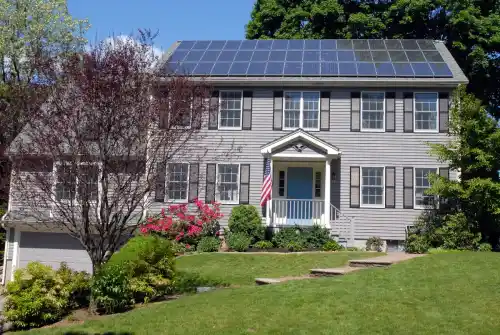
Direct Engineering Answer:
Under Internal Revenue Code Section 25D, the 30% Residential Clean Energy Credit is unavailable for qualifying expenditures placed in service after December 31, 2025. Before claiming your tax credit or planning battery storage capacity, model your system production using our free off-grid solar system sizing calculator. Before claiming your tax credit or planning battery storage capacity, model your system production using our free off-grid solar system sizing calculator. However, under IRC § 25D(c), any unused credit earned from an installation completed on or before December 31, 2025 carries forward indefinitely to 2026 and subsequent tax years via IRS Form 5695 Line 16. Standalone battery storage systems (3.0 kWh capacity or greater) and off-grid solar equipment qualify without requiring utility grid interconnection.
The federal residential clean energy credit under Internal Revenue Code 26 U.S. Code § 25D established a 30% tax credit for qualified solar electric property and stationary battery storage systems. For systems installed prior to statutory expiration, understanding how carryforwards interact with ongoing tax liabilities is essential for off-grid homeowners and remote property builders. To accurately budget your equipment investments against potential tax savings, review our comprehensive off-grid solar financial planning guide alongside current solar panel installation costs.
Actionable Engineering Thesis: Maximizing clean energy tax recovery requires establishing completion (“placed-in-service”) prior to statutory deadlines, verifying that standalone energy storage equals or exceeds 3.0 kilowatt-hours of manufacturer-rated capacity, and preserving an itemized 7-year audit record of invoices and municipal permits for IRS Form 5695 Line 16 carryforward claims.
“The Section 25D Federal Solar Tax Credit is restricted to grid-tied suburban homes, making standalone off-grid solar cabins and remote homesteads completely ineligible.”
Standalone battery storage systems (3.0 kWh or larger capacity) and off-grid solar installations qualify for the 30% credit under Section 25D without requiring a grid connection, provided the equipment was placed in service by December 31, 2025 at a property used as a residence by the taxpayer.
What Are the Current Eligibility Requirements for the Section 25D Credit?
To claim or carry forward the 30% federal clean energy credit under Internal Revenue Code Section 25D using IRS Form 5695, taxpayers and systems must satisfy six fundamental statutory criteria established by the IRS and federal tax code:
- System Ownership Requirement: The taxpayer must purchase the equipment outright using cash or financing loans. Systems installed under Power Purchase Agreements (PPAs) or third-party equipment leases do not qualify for the homeowner credit, as the third-party developer claims commercial tax benefits under Section 48.
- Residential Property Classification: The equipment must be installed at a residence located in the United States used as a home by the taxpayer. This includes primary single-family residences, condominiums, mobile homes, and off-grid cabins or vacation properties used personally. Properties utilized exclusively as commercial rental real estate are ineligible under Section 25D.
- Qualified Clean Energy Hardware: Eligible expenditures cover solar photovoltaic panels, solar inverters, balance of system (racking, cabling, conduit, DC disconnects), and standalone battery storage systems rated at 3.0 kilowatt-hours (kWh) capacity or greater (IRC § 25D(a)(6)).
- Placed-in-Service Timing Rule: Under IRS Form 5695 guidelines, expenditures are treated as made when the original installation is completed and placed in service. The One Big Beautiful Bill Act established that Section 25D is unavailable for qualifying expenditures placed in service after December 31, 2025. Signing a contract or paying a deposit in 2025 does not qualify if physical commissioning occurred in 2026.
- Indefinite Tax Liability Carryforward: Because Section 25D is a non-refundable personal tax credit, it cannot generate a direct IRS cash refund if the credit exceeds your tax liability. However, under IRC § 25D(c), any unused credit balance carries forward indefinitely to 2026 and subsequent tax years using Form 5695 Line 16.
- Off-Grid & Standalone Battery Eligibility: An active utility connection or Permission to Operate (PTO) is not required. Off-grid solar power systems and standalone battery banks operate under identical Section 25D qualification rules as grid-tied installations.

The Placed-in-Service Timing Standard: Completion vs. Contract Signing
The IRS explicitly states that the 30% residential clean energy credit covered qualifying property placed in service during 2022 through 2025, and that the credit is unavailable for property placed in service after December 31, 2025. The One Big Beautiful Bill Act ended Section 25D for expenditures completed after that statutory date.
The applicable tax-year instructions describe when costs are treated as paid: generally when the original physical installation is completed. For construction of a new home, the instructions specify that costs are treated as paid when the taxpayer begins using the dwelling as a residence. Crucially, IRS guidance does not make utility Permission to Operate (PTO) a universal substitute for the installation-completion rule. A PTO date alone does not decide every case, and keeping comprehensive project sign-off records is mandatory.

Paying a solar installation deposit or signing an equipment contract in late 2025 does not qualify an installation for the 30% credit if physical installation and commissioning occurred after December 31, 2025. The IRS strictly interprets “expenditure made” as the completion date of the functional installation.
Unused Credits from Earlier Years: The Form 5695 Line 16 Carryforward
The Instructions for IRS Form 5695 state that a taxpayer unable to utilize all of their residential clean energy credit because of personal tax liability limits may carry the unused portion into subsequent tax years. Form 5695 dedicates Line 16 specifically for calculating this credit carryforward balance.
This carryforward mechanism is not a new credit for post-2025 installations; rather, it is a statutory preservation of an unexhausted credit earned on an installation placed in service on or before December 31, 2025. If a homeowner earned a $9,000 tax credit in 2024 but only had $5,000 of federal tax liability, the remaining $4,000 carried to 2025, and any remaining balance carries forward to 2026 and subsequent tax years until fully absorbed.
Section 25D non-refundable credits offset your total federal income tax liability (Form 1040 Line 22), not your paycheck withholdings. If your tax credit exceeds your liability, you receive a full refund of taxes withheld during the year, while any excess credit rolls forward to Form 5695 Line 16 for the following tax year without expiring.
Standalone Battery Storage Sizing: The 3.0 kWh Statutory Threshold
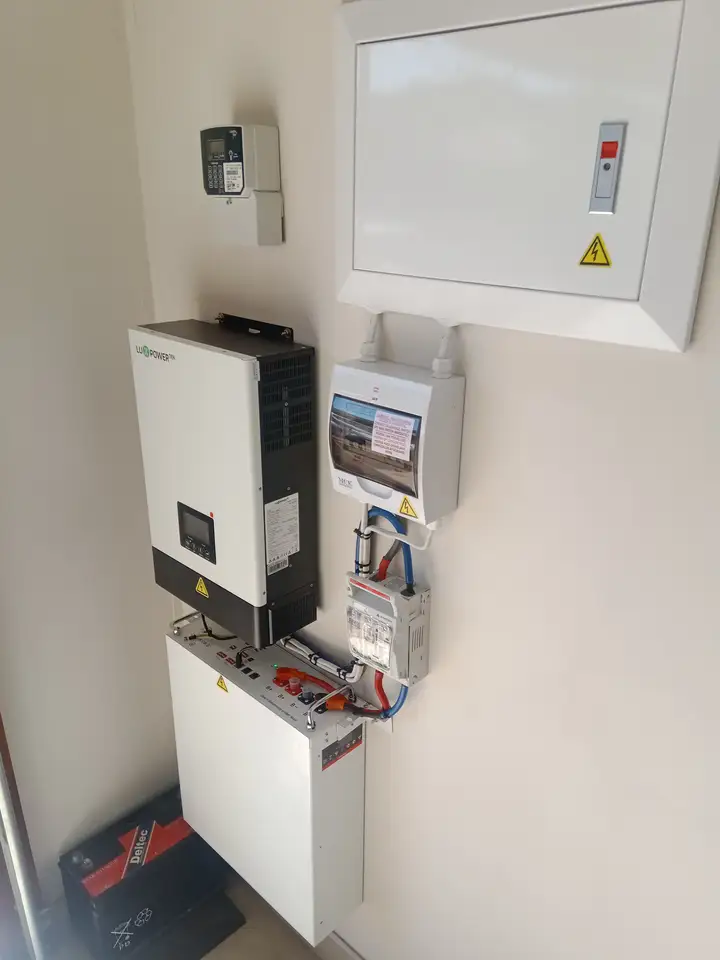
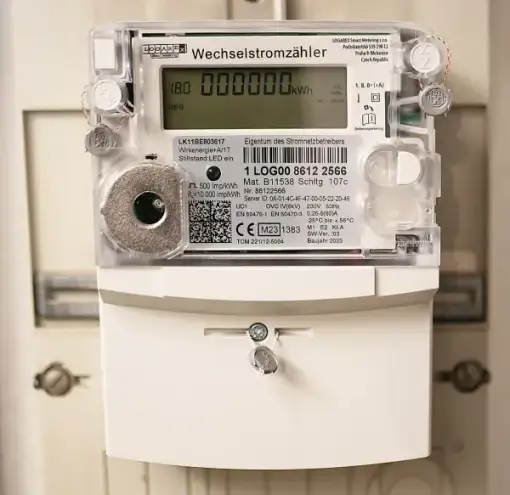
Under the Inflation Reduction Act amendments to Section 25D, standalone battery storage systems became independently eligible for the 30% credit without requiring simultaneous solar module installation. However, IRC § 25D(a)(6) establishes a mandatory technical hurdle: the energy storage equipment must have a manufacturer-rated capacity of at least 3.0 kilowatt-hours (3,000 watt-hours). Under National Electrical Code (NEC Article 706 for Energy Storage Systems and NEC Article 690 for PV Arrays), qualifying battery banks must feature certified battery management systems (BMS), rapid shutdown compliance, and listed overcurrent protection to pass municipal electrical inspections and substantiate tax credit claims. To size your storage bank accurately, follow our step-by-step home solar battery sizing guide and evaluate how much off-grid solar saves over a 10-year lifecycle.
This allows off-grid cabin owners and rural homeowners who added high-capacity lithium storage banks (such as a 48V 100Ah LiFePO4 battery bank rated at 5.12 kWh) to claim the full 30% credit on the batteries and associated DC wiring, provided the equipment was placed in service by the statutory cutoff date. Portable power stations or small solar generators rated below 3.0 kWh do not qualify.
IRS Section 25D Tax Credit & Carryforward Calculator
Compute your 30% qualified basis, current-year tax liability absorption, and Form 5695 Line 16 carryforward balance.
Panels, inverters, racking, BOS, and direct labor.
Must be rated at 3.0 kWh capacity or greater.
Form 1040 Line 22 (total tax before personal credits).
Unused balance from Form 5695 Line 16 of prior return.
Direct Amazon Link
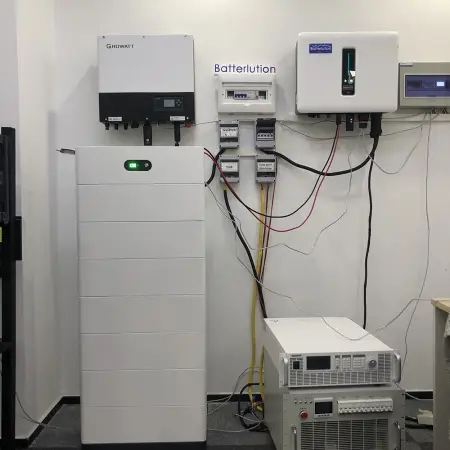
Substantiating renewable energy generation and battery energy capacity during an IRS audit requires calibrated electrical telemetry and certified circuit metering:
Real-time bi-directional circuit monitoring with 16 CT sensors. Logs solar generation and battery charging kWh data for tax compliance audit trails.
Professional non-contact AC/DC voltage detector and resistance diagnostic tool for solar combiner boxes and inverter commissioning logs.
Solar Tax Credit Documentation & Audit-Trail SOP Checklist
- Step 1: Compile Itemized Invoices: Maintain vendor receipts itemizing solar modules, inverter hardware, balance-of-system racking, and energy storage.
- Step 2: Document Placed-in-Service Date: Secure certified sign-off documentation (municipal electrical inspection sign-off, commissioning log, or utility interconnection letter).
- Step 3: Verify Battery Nameplate Capacity: Ensure manufacturer specification sheets explicitly certify that stationary battery capacity is 3.0 kWh (3,000 Wh) or greater.
- Step 4: Execute IRS Form 5695 Part I: Enter qualified solar electric expenditures on Line 1 and qualified battery storage expenditures on Line 5b. Complete Line 16 for unexhausted credit carryforwards.
- Step 5: Archive 7-Year Tax Defense Dossier: Store invoices, proof-of-payment receipts, manufacturer product spec sheets, and municipal permits in a secure permanent archive for at least 7 years.
Frequently Asked Questions
Sources & Statutory References
- Internal Revenue Service, Instructions for Form 5695 (Residential Energy Credits), including cost-timing rules and Line 16 carryforward instructions.
- Internal Revenue Service, FAQs on Modifications to Energy Credits Under Public Law 119-21 (One Big Beautiful Bill Act).
- United States House of Representatives, 26 U.S. Code § 25D – Residential Clean Energy Credit.
- North Carolina Clean Energy Technology Center, Database of State Incentives for Renewables & Efficiency (DSIRE).
Sources checked October 2026. IRS regulations and statutory provisions may change; always consult the official instructions applicable to your specific tax year and a certified public accountant (CPA).