How much does off-grid solar save each year? For many U.S. homeowners, the answer is roughly $1,500 to $4,000 in avoided electricity costs annually, but that range is only a planning starting point. Your actual result depends on household usage, local electricity rates, solar production, battery size, system cost, and how much backup equipment you need.
A grid-tied system may reduce your bill without eliminating it. A true off-grid system can eliminate the monthly utility bill, but it replaces that bill with a larger upfront investment and ongoing battery, maintenance, and backup costs.
The cheapest solar system on paper isn’t always the one that saves the most money over its useful life. How much does off-grid solar save in practice depends less on marketing claims and more on the specific mix of avoided utility costs, system size, and ongoing ownership expenses.
What “Savings” Means for Off-Grid vs. Grid-Tied Solar
The word savings gets used loosely in solar sales conversations. It can mean three different things.
Off-grid savings: the utility bill disappears
A fully off-grid home doesn’t buy routine electricity from a utility. That can eliminate energy charges, fixed monthly charges, demand-related fees, and future rate increases. In exchange, the homeowner owns and maintains the generation system.
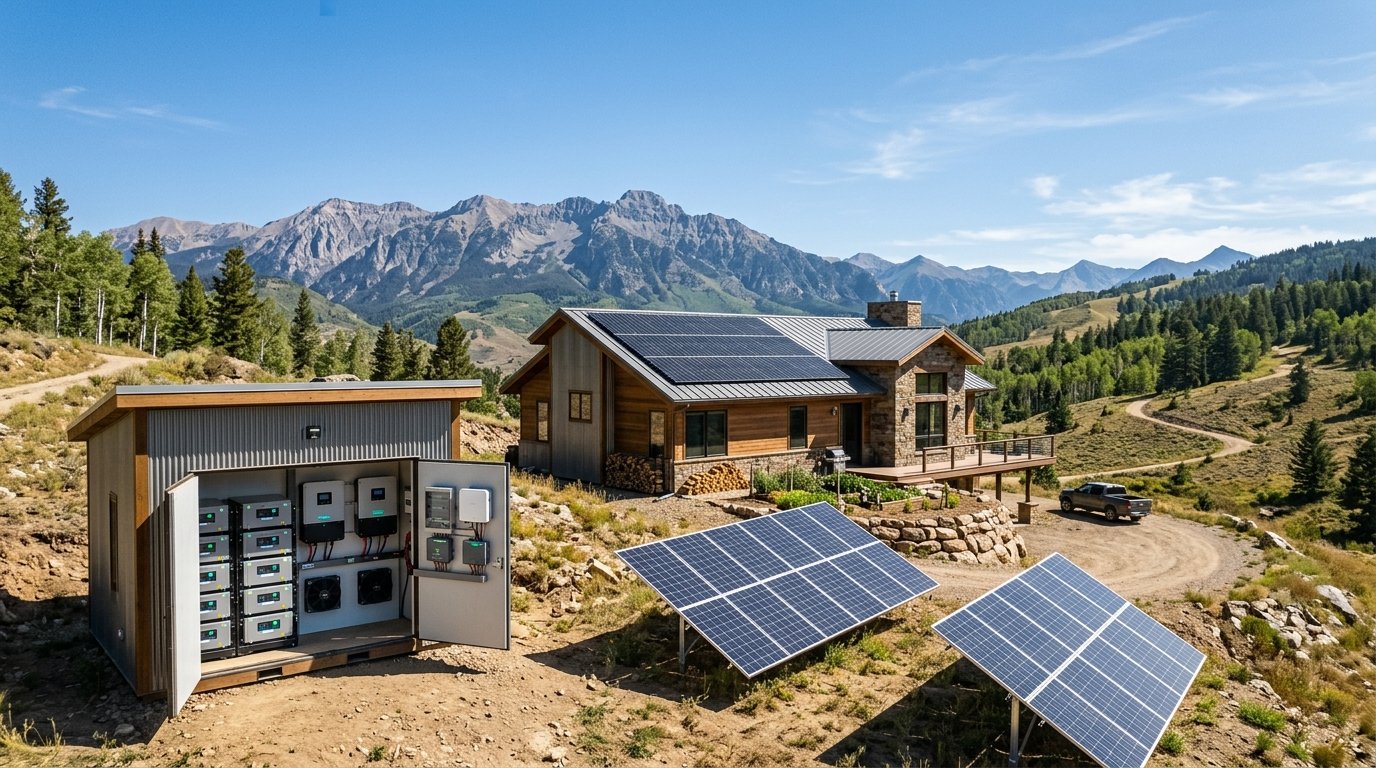
That sounds simple, but the avoided bill isn’t pure profit. An off-grid system may need a larger battery bank, a backup generator, replacement batteries, winter oversizing, and occasional repairs. Those costs belong in the savings calculation.
Grid-tied savings: the bill gets smaller
A grid-tied solar system typically reduces the amount of electricity you buy. During sunny hours, your panels serve household loads. Excess production may be exported under your utility’s net-metering or export-credit rules. At night or during cloudy periods, you draw electricity from the grid.
The result is usually a lower bill, not a zero bill. You may still pay a fixed customer charge, delivery fee, minimum bill, or charges for electricity imported at a different rate than the credit you receive for exports.
Avoided rate increases: a possible future benefit
Solar can also protect part of your budget from future utility-rate increases. If electricity becomes more expensive, each kilowatt-hour your system produces may offset a larger purchase. That benefit is real as a planning scenario, but it isn’t guaranteed. Don’t use a steep assumed rate increase to make a weak project look profitable.
How Much Does Off-Grid Solar Save? The Variables That Matter
Your savings estimate is only as good as the assumptions behind it. These five inputs do most of the work.
Local electricity rate
The U.S. Energy Information Administration reported an annual average residential electricity price of about 17.29 cents per kilowatt-hour in 2025, up from roughly 16.5 cents in 2024, with its short-term forecast pointing toward about 18 cents in 2026. Your rate may be much lower or higher. Check the energy charge on your bill, then look for delivery charges, time-of-use pricing, minimum bills, and seasonal changes.
A homeowner using 12,000 kWh per year at $0.1729 per kWh spends about $2,075 on the energy portion of the bill. That isn’t necessarily the full annual bill because fixed and delivery charges may be separate.
Use the EIA electricity-prices data as a national reference, not as a substitute for your utility bill.
System size
A larger solar array can produce more energy, but it costs more. The useful question isn’t “How many panels can fit?” It’s “How many kilowatt-hours should the system produce in an average year, and how much extra capacity do I need for difficult months?”
Off-grid systems often need more capacity than grid-tied systems because there is no utility available during a long cloudy spell. The array must replenish the battery while also serving current loads.
For a deeper look at production, load assumptions, and capacity, see the Off-Grid Solar System Sizing guide.
Sun hours and seasonal production
Two homes using the same amount of electricity can need very different systems. Solar production depends on location, roof orientation, shading, tilt, weather, and seasonal sunlight.
A system sized around annual average production may look excellent in a yearly spreadsheet and still struggle during the darkest month. Off-grid homeowners need to examine monthly production, not only the annual total. That may mean adding panels, more storage, a generator, or a plan to reduce loads during poor-weather periods.
Battery capacity
A grid-tied home can use the utility as a giant backup system. An off-grid home cannot. Batteries store solar energy for nighttime use and cloudy periods, so their usable capacity strongly affects both price and resilience.
Battery size also affects savings indirectly. Too little storage can lead to generator fuel use or curtailed solar production. Too much storage increases the upfront cost and may leave expensive capacity underused.
Pay attention to usable capacity rather than the battery’s headline nameplate capacity. Depth-of-discharge limits, inverter losses, reserve settings, and battery aging all affect the energy you can actually use.
Household consumption
A home using 8,000 kWh per year has a different savings ceiling from one using 20,000 kWh. High loads such as electric resistance heating, water heating, well pumps, air conditioning, workshops, and vehicle charging can change the design entirely.
Before estimating savings, list the loads you expect to run and how often. A small change, such as switching water heating or heating from resistance to a heat pump, may reduce the size and cost of the solar-battery system more effectively than adding panels later.
A Realistic Annual Savings Range With a Worked Example
Let’s use a slightly imperfect but realistic example instead of a perfectly round household.
Assume a homeowner uses 11,800 kWh per year and pays an average energy rate of $0.17 per kWh. The annual energy cost is:
- 11,800 kWh × $0.17 = $2,006 per year
Now suppose a grid-tied solar system offsets 75{176fcca6730a93a81d392d3d2de5285aaf114f6257de59f55b47dc4f356ad4a2} of annual consumption. The energy purchase avoided is:
- 11,800 kWh × 75{176fcca6730a93a81d392d3d2de5285aaf114f6257de59f55b47dc4f356ad4a2} = 8,850 kWh
- 8,850 kWh × $0.17 = $1,504.50 per year
That is a gross energy-bill saving. It does not include fixed charges, export-credit differences, maintenance, financing interest, or the cost of the system.
Description:
Now compare a true off-grid design. If the system reliably supplies the home’s annual electricity, the homeowner could avoid approximately $2,006 in annual energy purchases. But the system may also have ongoing costs:
- Battery reserve and replacement fund: $300 per year
- Routine maintenance and inspections: $150 per year
- Generator fuel and service reserve: $250 per year
- Insurance or equipment coverage increase: $100 per year
Estimated recurring costs total $800 per year, leaving an estimated net operating saving of about:
- $2,006 avoided energy cost − $800 ongoing cost = $1,206 per year
How much does off-grid solar save in a real household therefore depends heavily on whether the system can keep those ongoing costs under control while still covering the full load.
That doesn’t mean this home should stay grid-tied. The off-grid option may provide resilience, avoid a long utility extension, or make a remote property possible. It does show why “no electric bill” is not the same as “$2,006 of annual profit.”
For a broader project-cost framework, see the Off-Grid Solar System Cost 2026 guide.
How the Expired Federal 25D Credit Changes 2026 Savings Math
Older solar calculators often reduce a residential system’s price by 30{176fcca6730a93a81d392d3d2de5285aaf114f6257de59f55b47dc4f356ad4a2} before calculating payback. That assumption should not be used automatically for a new 2026 project.
The IRS confirms the Residential Clean Energy Credit under Section 25D ended for qualifying expenditures after December 31, 2025. In practical terms, a homeowner planning a new residential solar or battery project in 2026 should start with the full installed cost and subtract only incentives that have been confirmed for that specific project.
Consider a $42,000 off-grid system. An old calculator might show:
- Installed cost: $42,000
- Assumed 30{176fcca6730a93a81d392d3d2de5285aaf114f6257de59f55b47dc4f356ad4a2} federal credit: $12,600
- Net cost: $29,400
For a new 2026 residential project, that old federal-credit line should not be included as a default. The planning calculation becomes:
- Installed cost: $42,000
- Confirmed state or utility incentives: $4,000
- Planning net cost: $38,000
The difference matters. If the system produces $2,500 in net annual savings, the simple payback changes from about 11.8 years using the outdated $29,400 figure to about 15.2 years using the $38,000 figure.
A prior-year project, unused credit carryforward, or unusual installation timeline may require separate tax analysis. The key point is not to use an old 30{176fcca6730a93a81d392d3d2de5285aaf114f6257de59f55b47dc4f356ad4a2}-through-2032 assumption for a new 2026 installation. Read the Federal Solar Tax Credit 2026 guide for the full background.
Off-Grid Savings Compared With Grid-Tied Solar
Off-grid and grid-tied solar solve different financial problems.
Why off-grid can save more on the utility bill
A true off-grid home can eliminate the utility bill entirely. That may be valuable where electricity is expensive or where connecting a remote property to the grid would require a costly service extension.
Off-grid systems also avoid dependence on net-metering rules. There is no need to worry about export-credit reductions because the home isn’t sending ordinary surplus power to the utility for a bill credit.
Why grid-tied often has the better financial return
Grid-tied systems usually need fewer batteries and can rely on the utility during low-production periods. That cuts the upfront cost substantially. If the utility offers strong export credits and the home has good solar exposure, grid-tied solar may deliver a faster payback.
The tradeoff is resilience. Most standard grid-tied systems shut down during a grid outage unless they include approved backup equipment and storage.
The hybrid middle ground
A hybrid system keeps the grid connection but adds batteries and backup circuits. It can reduce the bill, provide outage protection, and avoid the full battery oversizing required for a completely off-grid home.
Hybrid systems often make sense for homeowners who want resilience without accepting the cost and lifestyle changes of full energy independence. Compare the additional battery cost with the value you place on backup power.
Ongoing Costs That Reduce Net Savings
A savings model that stops at the installation invoice is incomplete.
Battery replacement
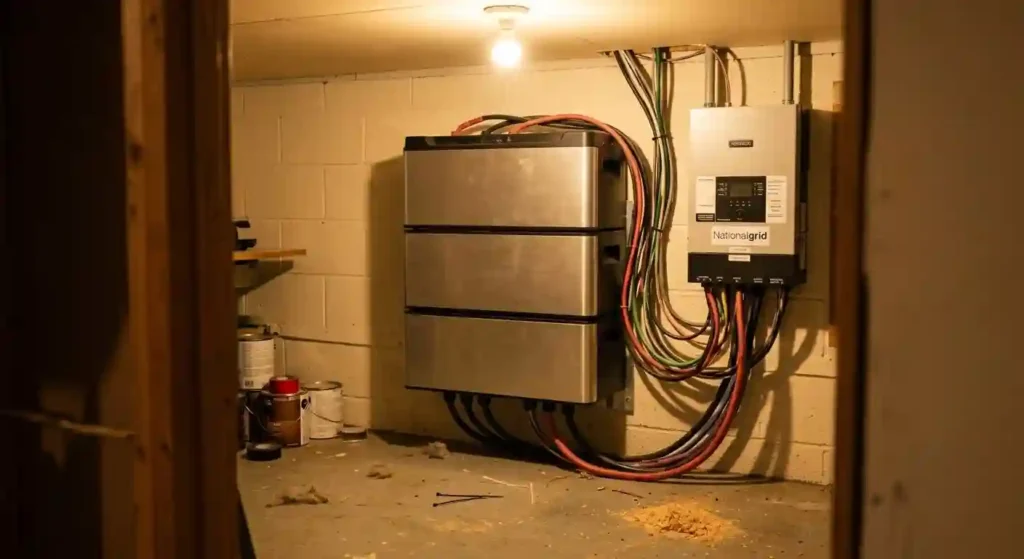
Battery life depends on chemistry, temperature, cycling, depth of discharge, and operating conditions. A replacement may be needed during the system’s lifetime, even if the original battery has a long warranty.
Set aside a replacement reserve rather than pretending the battery lasts forever. For example, if a $14,000 battery system may need replacement after 12 to 15 years, a rough reserve could be several hundred dollars per year. The actual reserve should reflect the equipment and your maintenance plan.
Maintenance and repairs
Solar panels have few moving parts, but an off-grid system includes inverters, charge controllers, batteries, monitoring equipment, disconnects, and sometimes a generator. Fans, pumps, wiring, and control hardware can fail.
Budget for inspections, vegetation control, cleaning where conditions require it, troubleshooting, and occasional component replacement.
Insurance and property work
Tell your insurer about the system and ask whether coverage changes. Ground mounts, battery enclosures, and generators may have different requirements from rooftop panels.
Roof repairs can also affect long-term economics. Removing and reinstalling panels is a cost that should appear in a realistic lifecycle plan.
Generator fuel and service
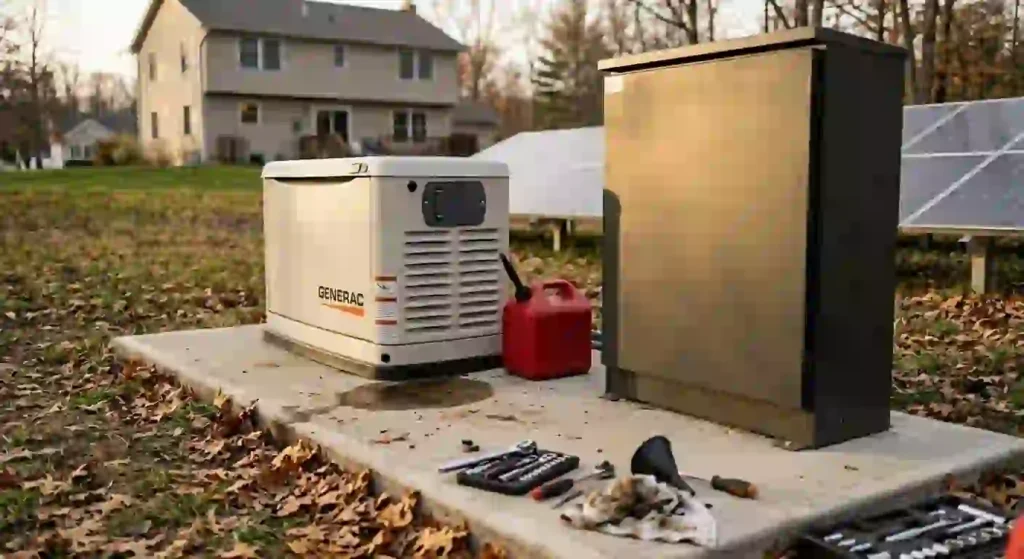
Many off-grid homes keep a generator for extended cloudy weather or emergency loads. Fuel, oil, filters, battery maintenance, annual service, and eventual replacement reduce net savings.
A generator doesn’t mean the solar system failed. It means the system was designed for reliability across difficult weather. Count it anyway.
Payback Period: A Straightforward Walkthrough
Simple payback is a useful first screen, not a full investment analysis.
Step 1: Calculate the net installed cost
Start with the cash price, then subtract only verified rebates or incentives. Add costs outside the quote, such as roof repairs, trenching, service upgrades, and site preparation.
The Solar Panel Installation Cost guide is useful for checking which items may be hidden inside a basic quote.
Step 2: Estimate annual gross savings
For grid-tied solar, multiply the kWh you no longer buy by your actual avoided electricity rate. For off-grid solar, begin with the utility energy cost you would otherwise pay.
Step 3: Subtract annual operating costs
Include maintenance, insurance changes, generator operation, battery reserve, monitoring fees, and other recurring costs. The result is annual net savings.
Step 4: Divide net cost by annual net savings
Example:
- Net installed cost: $38,000
- Annual avoided energy cost: $2,500
- Annual operating costs: $700
- Annual net savings: $1,800
- Simple payback: $38,000 ÷ $1,800 = 21.1 years
That is a long payback, but it may still be rational for a remote home that would otherwise face a $30,000 utility-line extension. Include avoided grid-connection costs when off-grid is replacing a specific alternative.
Financing changes the question
With financing, compare total repayment rather than only the monthly payment. A $38,000 system can become much more expensive after interest and origination fees. If the loan payment is higher than your avoided utility cost, the project may have negative monthly cash flow even if it eventually pays back.
For a detailed ROI framework, use the Complete Off-Grid Solar Financial Planning Guide.
Common Ways Homeowners Overestimate Solar Savings
They treat every solar kWh as equally valuable
A kWh used directly in the home may save the full retail rate. An exported kWh may earn a smaller credit. Battery charging and inverter losses reduce the energy delivered to loads.
They ignore winter conditions
Annual production can hide the month when an off-grid home needs a generator. Size around the difficult season, then model fuel use honestly.
They assume the federal credit still applies
For new post-2025 residential expenditures, the former Section 25D credit is not a default 2026 benefit. Remove it unless your tax professional identifies a specific earlier-year claim.
They use the utility’s current rate forever
Rates may rise, stay flat, or change structure. Run a conservative case alongside a higher-rate scenario.
They forget battery aging
A battery’s usable capacity declines. A system that barely covers the home on day one may rely on a generator later.
They compare an off-grid system with only the grid energy charge
The fair comparison may include the cost of a new utility connection, poles, trenching, monthly service charges, and future rate changes. Conversely, don’t hide off-grid generator and battery costs.
Frequently Asked Questions
Does off-grid solar pay for itself?
It can, but not always through utility-bill savings alone. Off-grid solar is more likely to make financial sense when grid connection is expensive, electricity rates are high, the home has manageable loads, and the system is sized without excessive battery capacity. Remote-property value and resilience may matter alongside payback.
How long until solar pays back its cost?
A simple payback period can range from roughly 10 to more than 20 years. Grid-tied systems often pay back faster because they need less storage. Off-grid systems can take longer unless they avoid a major utility-extension expense. Calculate using net installed cost and net annual savings, not a sales estimate based on gross bill reduction.
Do savings change with utility-rate increases?
Yes. If the price of electricity rises, each avoided kWh may be worth more. But rate structures can also change, and off-grid homeowners may be affected less directly because they aren’t buying routine utility power. Use several rate scenarios rather than assuming one increase every year.
Does going off-grid save more than staying grid-tied?
It can eliminate more of the utility bill, but it usually costs more because of battery storage, backup generation, and extra system capacity. Grid-tied or hybrid solar often offers a lower-cost financial path, while off-grid solar may be the better practical choice for remote properties or owners prioritizing independence.
What is the fastest way to estimate my potential savings?
Start with your annual kWh use, current electricity rate, location, and desired backup days. Then estimate system production and ongoing costs.
A calculator can give you a useful first pass, but an installer must verify the roof, electrical system, permits, and equipment design.
Estimate Your Own Off-Grid Solar Savings
So, how much does off-grid solar save? A reasonable first estimate is the utility energy cost you avoid, minus battery reserves, maintenance, insurance, generator costs, and other system expenses. For many households, that means approximately $1,500 to $4,000 in annual net or near-net savings, but the number can be far outside that range for a high-use home, a remote property, or a low-rate utility.
Actual savings vary based on electricity rates, household usage, system size, and location. Use these figures as planning estimates, not guarantees.
How much does off-grid solar save for your specific property is best answered by running the numbers with your own utility bill and local solar conditions rather than relying on national averages.
Use the site’s solar sizing and cost calculator to model your own electricity use, solar production, battery capacity, estimated system cost, and potential annual savings. Start with your real utility bill and compare the result with multiple professional quotes before making a decision.
Sources
- U.S. Energy Information Administration, “Electricity Explained: Factors Affecting Electricity Prices,” including the 2025 annual average U.S. residential electricity price.
- Internal Revenue Service, current FAQ guidance on the One Big Beautiful Bill Act and the Section 25D Residential Clean Energy Credit.
This article provides general educational information, not tax, financial, electrical, or engineering advice. Verify current utility rates, incentives, equipment pricing, and tax treatment for your project.