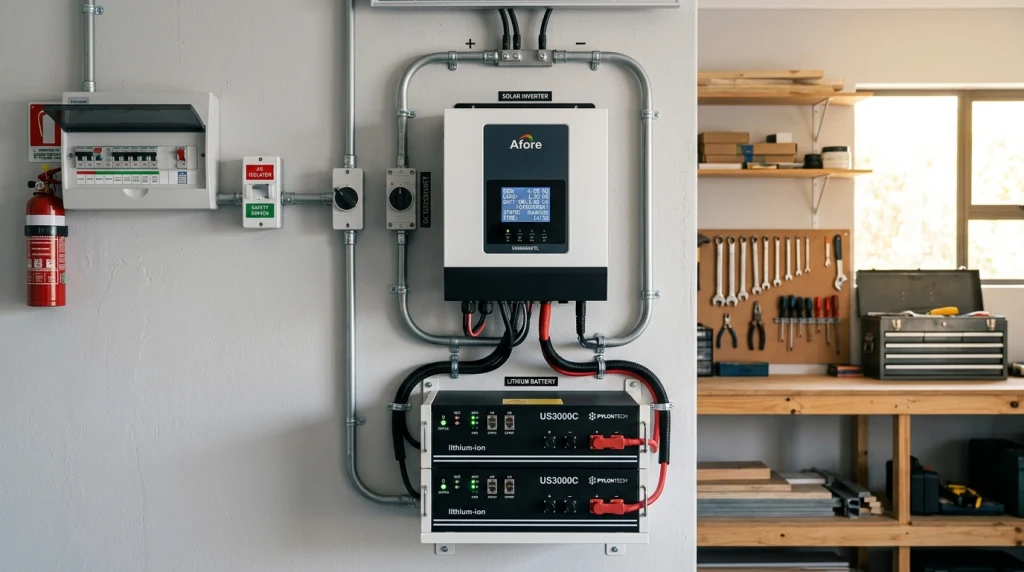
There is no single inverter wattage that fits a home, cabin, or RV. The answer depends on which loads may run together, their startup requirements, the AC voltage and phase required, the inverter model, and how its DC source is configured.
First identify the system type
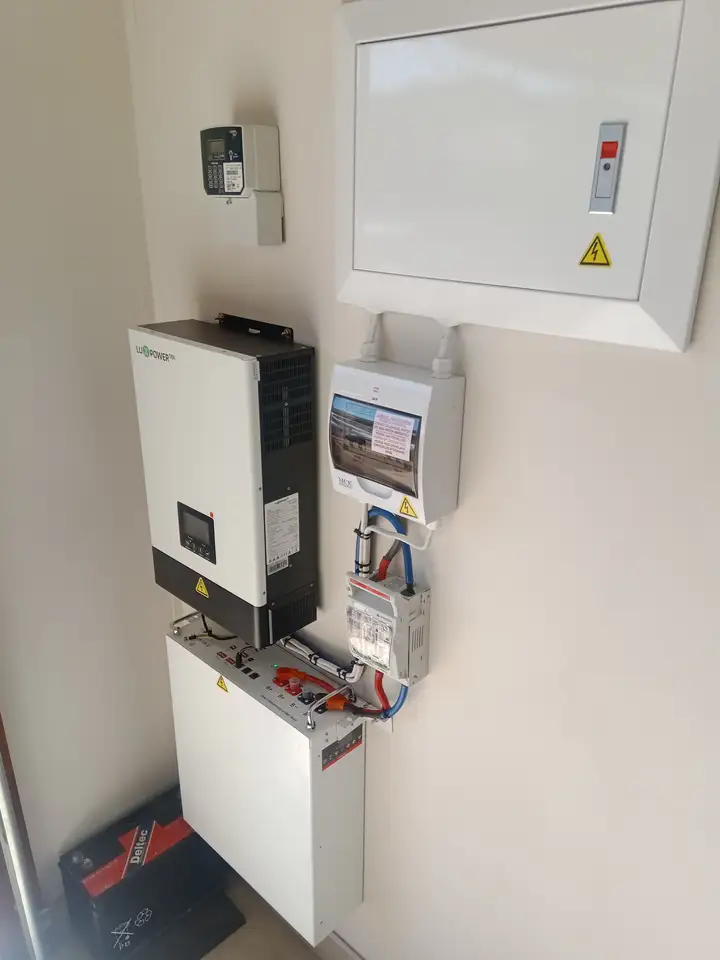
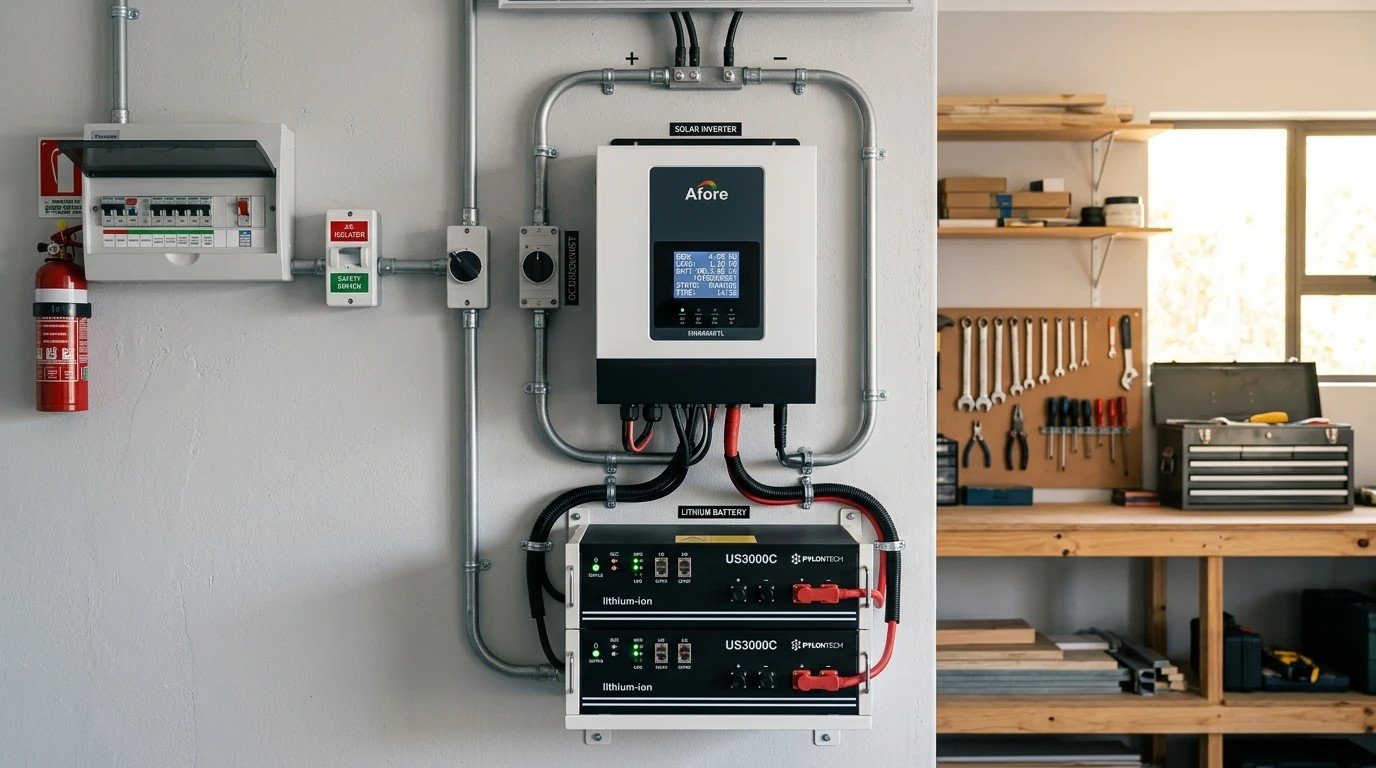
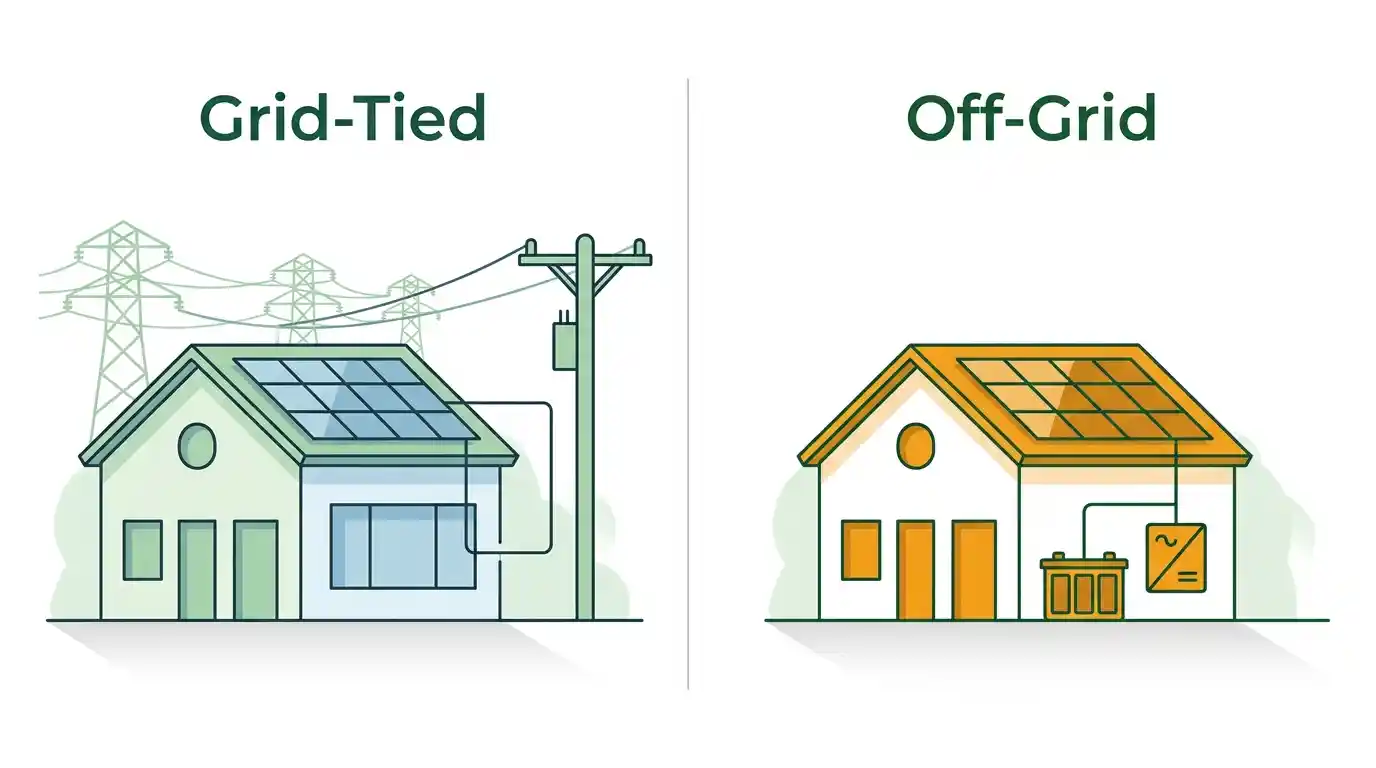
A grid-connected PV inverter converts array output to AC and must be compatible with the PV array, the utility connection, and the interconnection rules. A stand-alone or backup inverter supplies selected loads from a battery, generator, or both; its output must support the loads that can operate at the same time. These are different design questions. Do not size a battery inverter from panel wattage alone, or size a grid-connected inverter from household peak load alone.
Estimate simultaneous continuous loads
List the equipment that could operate together in the operating scenario you care about. Use the voltage, current, watts, and power-factor information on each product label or manual; do not add every appliance in the building if they will not operate together, and do not assume loads will be staggered unless the system actually controls that sequence.
Compare the resulting scenario with the inverter continuous output rating in both watts and volt-amperes (VA), at the expected ambient temperature and installation conditions. Manufacturer ratings can change with temperature and model; a fixed percentage cushion is not a substitute for checking the exact data sheet, duty limits, and required AC output voltage, frequency, and phase.
Use equipment-specific startup data
Motors, compressors, pumps, and some electronic power supplies can draw more power at startup than while running. The size and duration of that demand depend on the specific equipment and operating conditions. Look for locked-rotor current, starting current, or a manufacturer-specified startup requirement; do not estimate every motor using one surge multiplier. Check that the inverter peak rating lasts long enough for the startup event and is stated in units comparable to the load data.
For each credible startup scenario, add the other loads that remain on to the starting demand of the device being started. If a 2,400 W running scenario includes a motor that normally uses 800 W and other loads of 1,600 W, and that motor has a documented 4,500 W startup demand, the startup scenario is 1,600 W + 4,500 W = 6,100 W. Do not add 4,500 W to the original 2,400 W total, because that would count the motor running draw twice. These figures illustrate the arithmetic only; they are not typical appliance values or an inverter recommendation.
Check AC output and product limits
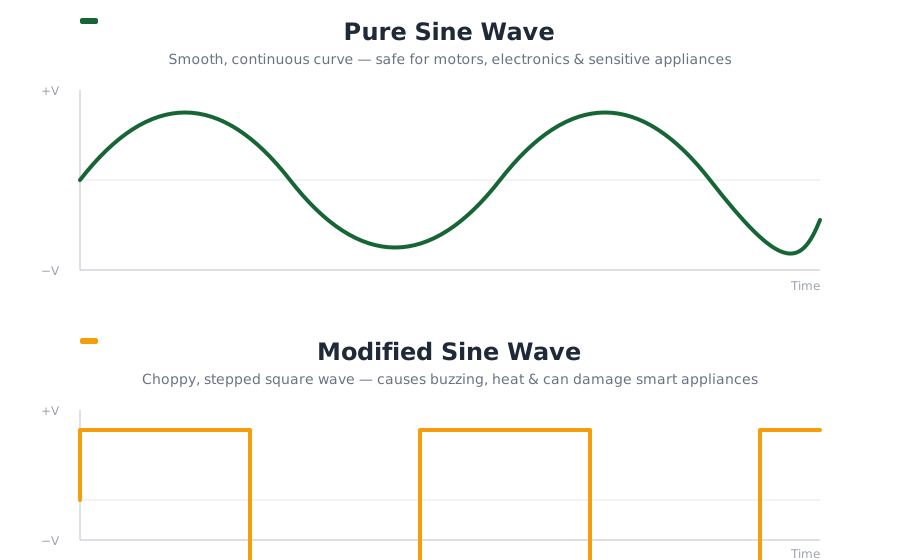
Confirm whether the loads require 120 V, 240 V, split-phase output, a particular frequency, or a specific waveform. Check each appliance and inverter manual for compatibility. Compare continuous watts and VA, startup watts or VA and duration, temperature derating, altitude limits, and any transfer-switch or generator-input ratings that apply. A pure-sine label alone does not establish compatibility, and a generic inverter category does not establish a surge duration.
Understand the battery-side current
For a rough illustration, DC current can be estimated as AC load divided by DC voltage and conversion efficiency:
Approximate DC current = AC load watts / (DC bus volts x inverter efficiency)
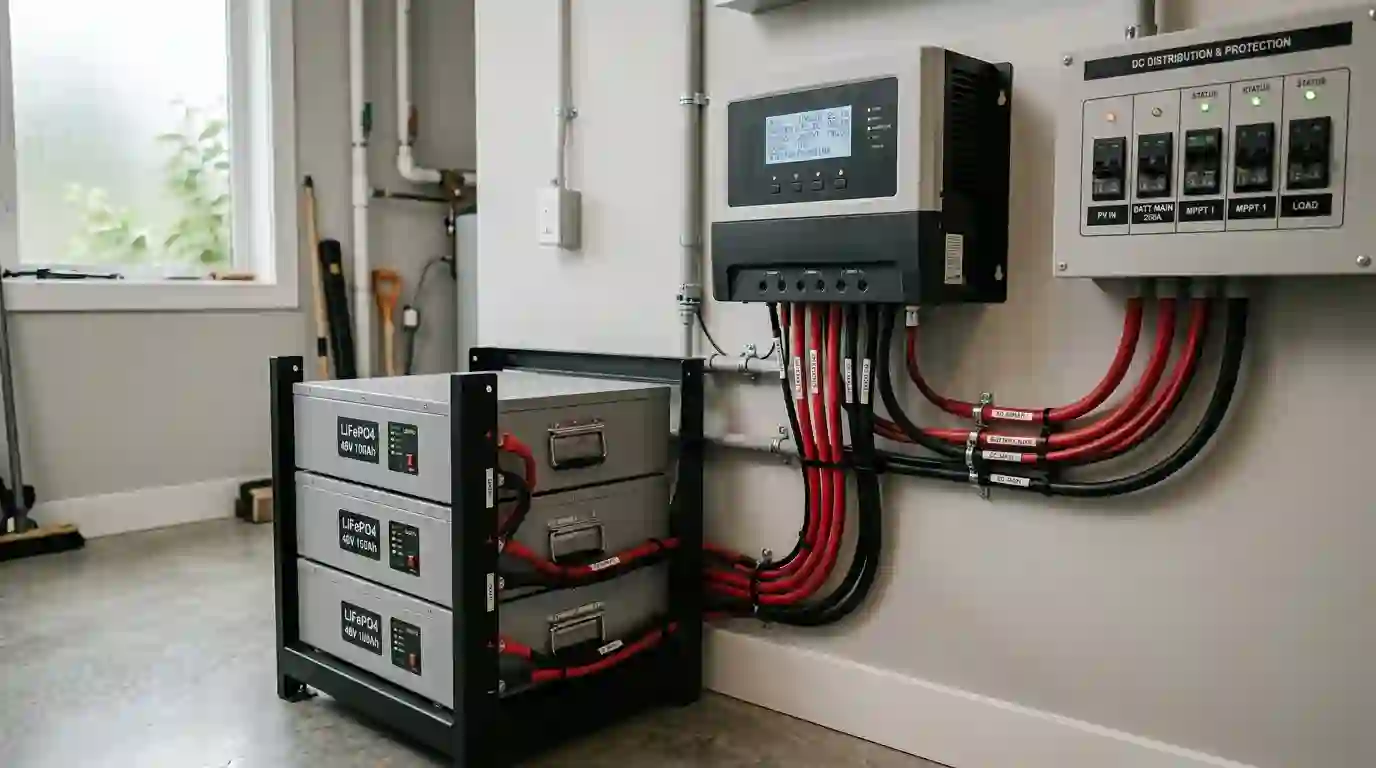
At an assumed 90% efficiency and nominal voltage, a 3,000 W AC load corresponds to about 278 A at 12 V, 139 A at 24 V, or 69 A at 48 V. This is arithmetic under stated assumptions, not a battery-voltage recommendation. Actual current changes with voltage under load, efficiency, power factor, and operating conditions. Confirm the inverter permitted DC range and the battery manufacturer continuous and peak current limits, including the battery management system.
These current examples do not specify cable gauge, fuse size, disconnects, or grounding. Those choices depend on the equipment instructions, conductor material and insulation, run length, routing, temperature, fault-current capability, and applicable electrical requirements. Have the complete DC and AC installation checked by a qualified professional; do not copy a generic wire-and-fuse table.
For grid-connected PV, treat the DC-to-AC ratio as an input
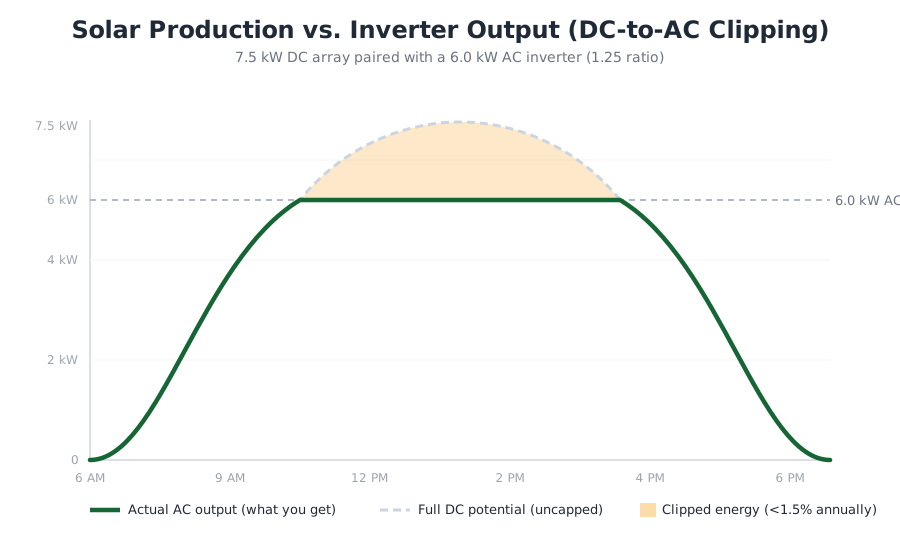
The array DC-to-inverter AC ratio is calculated by dividing the array nameplate DC watts by the inverter rated AC watts. For example, 7,200 W DC divided by 6,000 W AC equals 1.20. That ratio describes a proposed configuration; by itself it does not say whether the design is optimal, how much energy will be clipped, or what it will save.
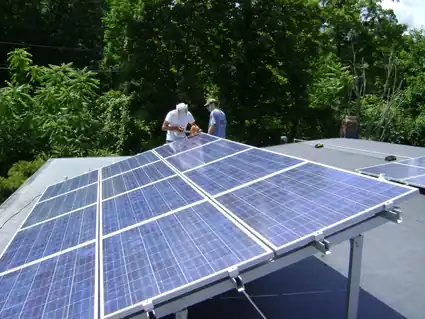
Any comparison of inverter sizes should use the proposed module layout, orientation, shading, temperature assumptions, inverter limits, applicable utility requirements, and a location-specific production model. Clipping occurs when available DC power exceeds the inverter AC output limit, but its annual energy effect varies with the actual system and weather. Do not treat a universal ratio, annual-loss percentage, or equipment-cost range as a project result.
Cold-weather PV voltage is a separate design check
For a PV string, the cold-condition open-circuit voltage depends on the module rated Voc, its documented temperature coefficient and tolerances, the number of modules in series, and the site design temperature. Compare the resulting design value with the inverter maximum DC voltage and operating range, along with its current and input limits. A nominal panel voltage and an example morning temperature are not enough to declare a string safe. Use the exact module and inverter documentation and the applicable design rules; string design should be verified by a qualified installer.
What the site calculator can and cannot do
The site calculator provides preliminary solar-array and battery estimates from entered energy use and stored location-based solar data. It does not select an inverter, determine motor-starting capability, size conductors or overcurrent protection, verify equipment compatibility, or produce an installation design.
Frequently asked questions
How do I estimate inverter size for off-grid loads?
List the loads that may run together, use their actual ratings, and compare the continuous and startup scenarios with the exact inverter specifications. This is a planning method, not an equipment recommendation.
Should inverter watts match solar-panel watts?
Not for every system. A grid-connected PV design compares array DC capacity with inverter AC capacity and project-specific limits. A battery inverter is checked against concurrent loads and startup demand. The DC-to-AC ratio alone does not establish an optimal design.
How should I estimate motor startup demand?
Use the motor or appliance manufacturer data for starting current or power and its duration. For a startup scenario, add the other loads that remain on to the starting demand; do not count the motor running draw twice.
Can I use a generic cable or fuse table?
No. Cable and protection choices depend on the inverter and battery instructions, current, run length, conductor and installation conditions, fault-current rating, and applicable electrical rules. Have the installation checked by a qualified professional.
Does a 1.20 DC-to-AC ratio mean the system is optimally sized?
No. It is the arithmetic ratio of array nameplate DC watts to inverter rated AC watts. It does not predict clipping, annual energy, or project value without a site-specific design and production analysis.
Does the site calculator choose an inverter?
No. It provides preliminary solar-array and battery estimates. It does not select an inverter, verify startup or equipment compatibility, size wiring, or create an installation design.
Sources
- U.S. Department of Energy, Solar Photovoltaic System Design Basics, for the role of inverters in PV systems.
- Victron Energy, Inverter Smart technical specifications, as one model-specific example of temperature-dependent continuous ratings, peak power, efficiency, and no-load consumption. These values are not universal inverter specifications.
- National Renewable Energy Laboratory, PVWatts Calculator, for preliminary, location-based PV energy estimates; a production estimate does not verify electrical compatibility or code compliance.
Sources checked October 4, 2026. Manufacturer specifications and local electrical requirements can change; verify current documents for the exact equipment and site.