⚡ Quick Sizing Rules: Off-Grid Solar for Shed Projects
Illustrative configurations only: these combinations have not been validated against measured loads or specific product documentation. They are not equipment recommendations and do not establish that a system will meet a load, start a tool, or provide a particular runtime. Obtain a site- and equipment-specific review.
- Storage & LED Lighting Shed: 200W solar panels + 12V 100Ah LiFePO4 battery (1.28 kWh) + 600W pure sine wave inverter. Cost: obtain current equipment quotes.
- Hobby Workshop (Cordless Tools, Lights, Fans): 400W–800W solar panels + 24V 100Ah LiFePO4 battery (2.56 kWh) + 1,500W–2,000W pure sine wave inverter. Cost: obtain current equipment quotes.
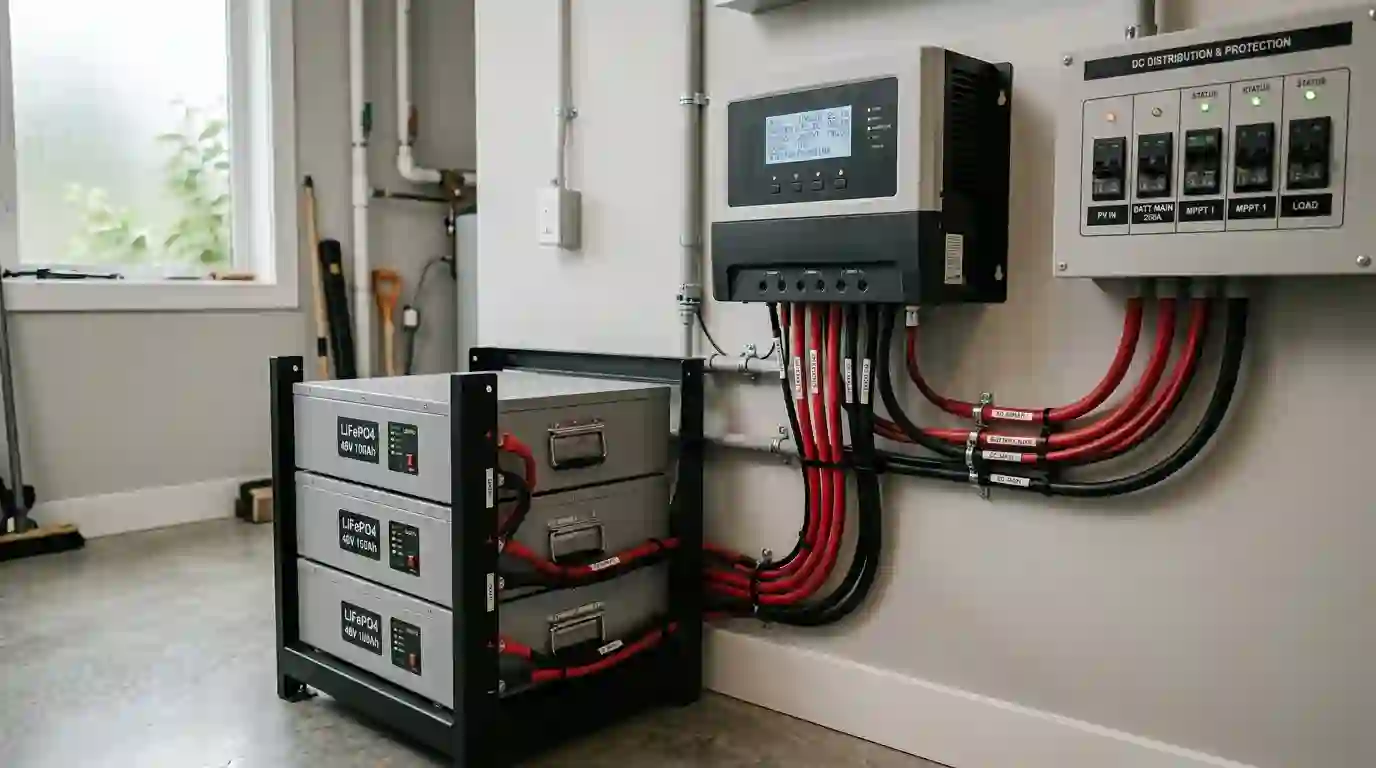
- Heavy Woodworking / Studio (Table Saws, Compressors, Mini-Split): 1,200W–2,400W solar panels + 48V 100Ah server rack battery (5.12 kWh) + 3,500W–5,000W inverter/charger. Cost: obtain current equipment quotes.
- Inverter planning: Motor-driven tools may draw more current at startup than while running. There is no universal surge multiplier or duration; check the exact tool and inverter manufacturer data.
Cost note: This guide provides no verified market-price ranges. Obtain current, itemized quotes for the same loads, system scope, installation, permits, maintenance, and replacement assumptions.
1. Trenching Grid Power vs. Off-Grid Solar for Sheds
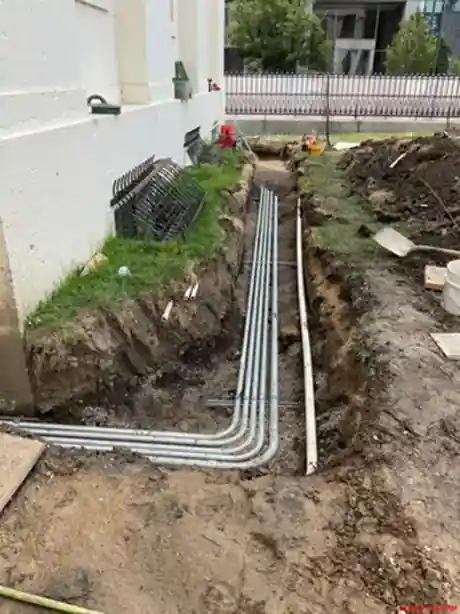
Grid power and off-grid solar are not directly comparable without a site-specific scope. Trenching cost depends on distance, soil, service capacity, design, permits, restoration, and labor. This guide provides no trenching or savings estimate. Request itemized local quotes for the same loads and scope, including distance, soil, service capacity, design, permits, restoration, and labor.
A shed can be served by a utility feeder or by a separately designed off-grid system. Solar equipment does not by itself guarantee that a particular load will run or remain powered during an outage. Compare options for the same loads and site, and have electrical work reviewed against the equipment instructions and local requirements.
| Decision Factor | Grid Feeder | Off-Grid Solar |
|---|---|---|
| Upfront cost | Obtain an itemized local quote. | Obtain current compatible-equipment and installation quotes. |
| Site work | Routing may require excavation or other work, depending on the property. | Mounting and cable routes depend on the site and system design. |
| Utility outage | Power availability depends on the utility and any separately designed backup. | Available power depends on system design, stored energy, weather, and connected loads. |
| Expansion | Depends on service capacity and local requirements. | Depends on equipment compatibility, capacity, and local requirements. |
| Permits and inspection | Confirm requirements with local authorities. | Confirm requirements with local authorities. |
Cost note: This article provides no market-price estimates. Compare current, itemized quotes for the same loads and scope, including equipment, installation, permits, site work, maintenance, and replacement.
Permitting note: Requirements depend on the site, system design, adopted codes, and local authority. Confirm permit and inspection requirements before buying equipment or beginning work.
2. Conducting a Shed Electrical Audit: Watts vs. Watt-Hours
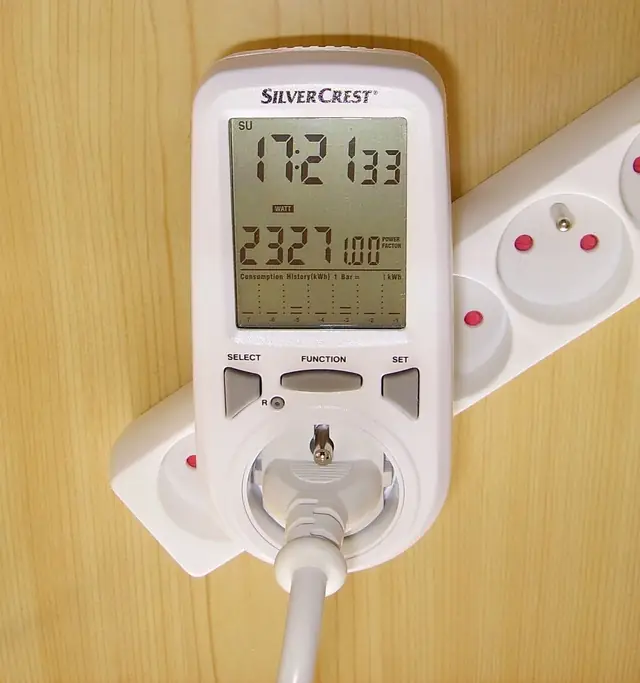
Shed floor area alone does not determine energy use. Record the actual equipment, its input data, operating time, and which loads may run together; two similarly sized sheds can have very different demand.
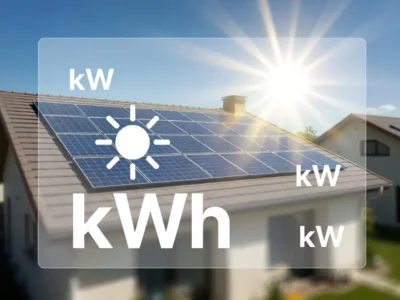
Before buying gear, separate power from energy. You need to know Watts and Watt-hours:
- Watts (W): The power drawn at one moment. This sets your inverter size and cable thickness.
- Watt-hours (Wh): Watts multiplied by run time. This sets your solar array size and battery storage.
| Appliance / Tool | Continuous Running Watts | Typical Daily Run Time | Daily Energy Consumption | Motor Startup Surge |
|---|---|---|---|---|
| Overhead LED Shop Tubes (4x) | 60 W | 4.0 Hours | 240 Wh | None (60W) |
| 18V Cordless Tool Dual Charger | 120 W | 1.5 Hours | 180 Wh | None (120W) |
| Soldering Station / Glue Gun | 80 W | 1.0 Hour | 80 Wh | None (80W) |
| Benchtop Drill Press (1/3 HP) | 350 W | 0.5 Hours | 175 Wh | 1,100 W (Induction Surge) |
| 10-Inch Contractor Table Saw | 1,800 W | 0.25 Hours (intermittent) | 450 Wh | 3,800 W (Severe Surge) |
| 12-Gallon Shop Vacuum | 1,100 W | 0.5 Hours | 550 Wh | 2,400 W (Motor Inrush) |
| Compact Workshop Mini-Fridge | 65 W | 8.0 Hours (duty cycle) | 520 Wh | 350 W (Compressor Kick) |
| Laptop & Wi-Fi Extender | 75 W | 4.0 Hours | 300 Wh | None (75W) |
| Typical Weekend Workshop Total | Peak demand: not calculated | — | 2,495 Wh / Day (~2.5 kWh) | Startup demand: not calculated; model-specific |
Illustrative assumptions only: The listed device values are not product measurements or specifications. The daily-energy total is the sum of the example watt-hour assumptions; no combined peak or startup demand is established because the table does not define a simultaneous-load pattern. Replace each value with the actual equipment documentation and measured use.
3. Comparing 12V, 24V, and 48V System Concepts
For the same electrical power, current is related to voltage by the basic relationship P = V × I. Actual current also depends on operating voltage, conversion efficiency, and load conditions, so nominal voltage alone does not determine system capability.
These voltage classes are not equipment or wiring recommendations. Battery, inverter, controller, conductor, and protection-device compatibility must be determined from the exact product documentation, site conditions, applicable local rules, and a qualified professional review. This guide does not provide cable, fuse, disconnect, or component sizing.
4. Shed Energy-Planning Checklist
Before comparing system options, collect information about the loads and the site. This checklist is for planning a discussion, not for selecting equipment or designing an installation.
- Record each device model, its manufacturer-stated input, expected daily use, and whether its demand varies or includes motor startup.
- Identify which loads may operate at the same time and which are essential during an outage.
- Record the site location, seasonal shading, panel mounting constraints, and any available monthly solar-resource data.
- Ask a qualified local electrical professional to assess compatible equipment, wiring and protection, permits, grounding, and installation requirements.
Do not treat an online example or energy estimate as confirmation that a system can start a tool, meet code, or operate reliably through particular weather conditions.
5. Sizing Solar Panels for Shed Roofs: Shed-Specific Derating
Unlike residential homes that often have expansive, unshaded roofs, detached sheds are frequently surrounded by fences, neighboring structures, and tree canopies. When sizing an off-grid solar for shed array, applying realistic system derating is an essential first calculation step.
Solar output varies with location, season, shading, orientation, temperature, equipment, and system losses. There is no single loss factor that applies to every shed system; any preliminary estimate should state its data source and assumptions and should not be treated as an equipment design.
Use current, location-specific production data and stated system assumptions for preliminary planning; verify all equipment choices separately.

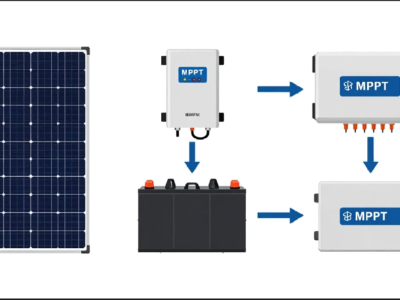
Overcoming Shed Roof Shading with MPPT Technology
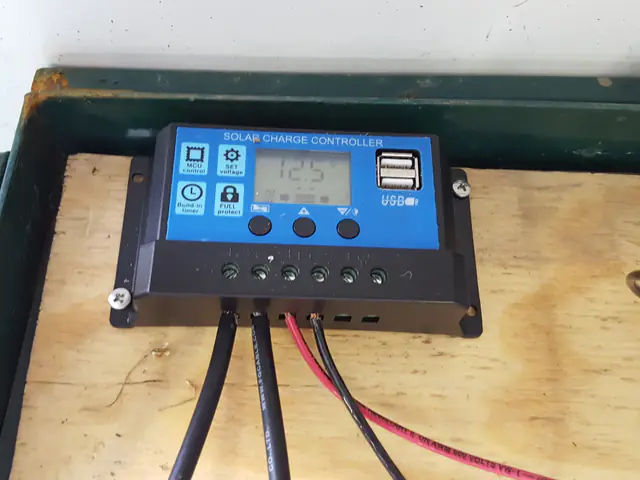
MPPT and PWM controllers use different operating approaches; this guide makes no quantified performance comparison or controller recommendation. Expected results depend on the exact modules, controller, battery, temperature, and system configuration. NREL PVWatts estimates PV production for stated assumptions; it does not select a controller or validate a complete off-grid system.
Panel wiring configuration must be selected for the exact module electrical characteristics, site temperature range, and charge-controller input limits. Do not use a generic array-voltage target; have a qualified professional verify the design against manufacturer documentation and local requirements. See our guide to wiring solar panels in series vs parallel for educational background.
6. Battery Sizing & The Cold-Temperature Storage Trap
LiFePO4 and lead-acid batteries are both used in off-grid systems. Their suitability, usable capacity, operating limits, maintenance, and lifetime cost vary by product and application; compare current manufacturer documentation for the specific models under consideration.
| Battery Planning Comparison (Verify Product Datasheet) | LiFePO4 Lithium Battery | AGM / Sealed Lead-Acid |
|---|---|---|
| Usable Depth of Discharge (DoD) | Follow the product manual; usable capacity and recommended DoD vary by model and operating conditions. | Follow the product manual; usable capacity and recommended DoD vary by model and discharge rate. |
| Cycle Life (Compare Datasheet Conditions)* | Product-specific; compare ratings at stated DoD, temperature, charge rate, and capacity-retention endpoint. | Product-specific; compare ratings at the same DoD, temperature, and test conditions. |
| Voltage Sag Under Tool Load | Depends on battery design, temperature, state of charge, BMS, cabling, and load. | Depends on battery condition, temperature, discharge rate, cabling, and load. |
| Weight per 100Ah (1.28 kWh) | Varies by model and construction; check the product specification. | Varies by model and construction; check the product specification. |
| Cost per Usable kWh (Calculate from Current Quotes) | Calculate from a current quote, usable capacity, service life, and replacement assumptions. | Calculate from a current quote, usable capacity, service life, and replacement assumptions. |
*Battery Cycle Life Notice: Cycle-life ratings are product-specific. Compare datasheets at the same depth of discharge, temperature, charge/discharge rate, and capacity-retention endpoint; actual service life depends on operating conditions and warranty.
7. Inverter Sizing for Workshop Power Tools: Understanding Motor Inrush
Motor starting demand varies by motor, tool model, mechanical load, and controls. No single surge multiplier or duration applies universally. Check the specific tool nameplate and manual, then compare documented startup demand with the inverter surge rating and battery/BMS limits.
Pure Sine Wave vs. Modified Square Wave Inverters
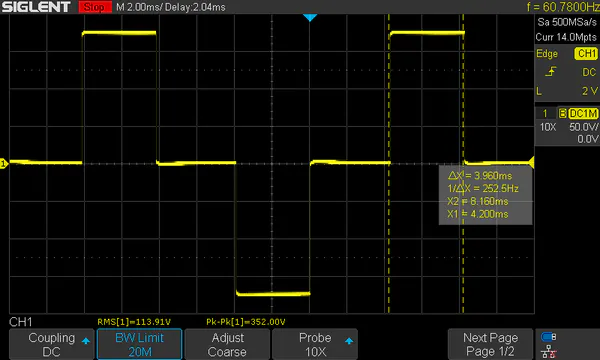
Modified-waveform and pure-sine inverters may behave differently with individual motors and chargers. IEEE 519 addresses harmonic control in electric power systems; it is not a compatibility test for a specific inverter and appliance. Check the equipment manufacturers’ documented compatibility and time-limited surge ratings; do not assume waveform label alone establishes suitability.
8. Electrical Planning & Safety
Solar arrays, battery banks, and inverter-fed AC circuits can create shock, arc, and fire hazards. This article is an educational planning resource, not a wiring design or installation procedure.
Information to gather for a professional review
- Model numbers and manufacturer documentation for the modules, charge controller, battery, inverter, and protective devices.
- Planned equipment locations, conductor routes and lengths, environmental conditions, and the loads the system is intended to serve.
- Local permit, inspection, utility, and outbuilding requirements, confirmed with the relevant local authority.
- A site-specific review of conductor and overcurrent protection coordination, disconnects, equipment bonding, grounding, and inverter neutral arrangements.
9. Equipment Quote Worksheet
Price estimates are omitted because no dated supplier quotes or reproducible price dataset are cited. Use this table as a quote worksheet: record the supplier, model, date, taxes, shipping, installation, permits, and warranty for each compatible component.
How to use this quote worksheet: Compare current, compatible component quotes for the same system scope. Include installation, permits, balance-of-system parts, replacement intervals, and maintenance; do not treat an equipment-only subtotal as a complete installed price.
| Quote category | Supplier, model, and quote date | Quoted amount and scope |
|---|---|---|
| Modules and mounting | Record current compatible products | Include shipping and tax |
| Battery and charge controller | Record exact models and manufacturer limits | Include compatible accessories |
| Inverter and protective equipment | Record exact models and required components | Include installation requirements |
| Electrical and structural work | Record installer and quote date | Include permits, inspection, and site work |
| Maintenance and replacement | Record stated service intervals and warranty | Use documented assumptions |
| Total for defined scope | List inclusions and exclusions | Calculate from current itemized quotes |

10. 5 Critical Shed Solar Mistakes to Avoid
- Panel angle and soiling: Yield differences depend on location, roof orientation, shading, weather, snow, and cleaning. A fixed annual loss percentage or tilt range is not universal. Model the site-specific output; tilt may help shed water or snow but does not guarantee self-cleaning.
- Using unsuitable DC conductors: Conductor and protection-device selection depends on the exact equipment, current, circuit length, installation conditions, and applicable requirements. Do not use automotive jumper leads as fixed system wiring unless the equipment manufacturer and qualified designer explicitly approve that exact use.
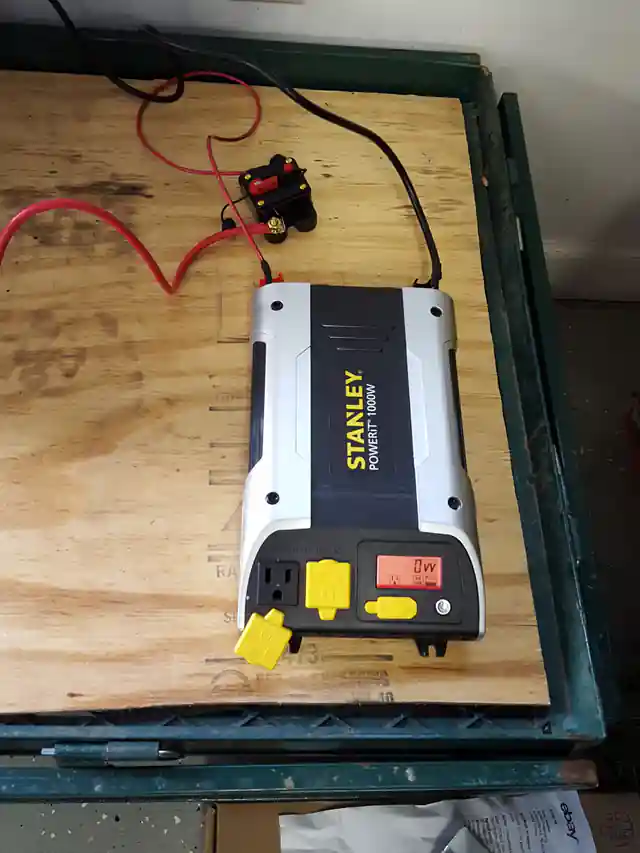
- Inverter standby use: Idle consumption is model-specific. Check the inverter datasheet and include expected standby hours in the daily energy estimate.
- Battery overcurrent protection: Fault protection requires a design matched to the battery, inverter, conductors, protective devices, installation, manufacturer instructions, and locally adopted requirements. Do not select a device or placement from a generic article example; have the complete design reviewed by a qualified local professional.
- Ignoring seasonal solar production: Available solar energy changes by location, month, weather, shading, and snow conditions. Use site-specific monthly production data and disclose its assumptions; PVWatts is a production estimator, not an off-grid storage or reliability assessment.
11. Frequently Asked Questions
Is off-grid solar cheaper than trenching grid power to a shed?
There is no reliable general answer without comparable local quotes and a defined scope. Compare an electrician-installed feeder with a solar system that serves the same loads, including permits, panel or service work, equipment replacement, maintenance, and outage needs. The price ranges previously shown are removed because the cited source does not substantiate them.
What size solar system do I need to run a workshop shed?
System sizes depend on measured daily energy, seasonal sun, autonomy, simultaneous loads, and motor startup. The wattage and battery combinations earlier in this guide are examples only, not universal requirements or guarantees; size each system from the actual equipment and local conditions.
Can an off-grid shed solar system run a table saw or air compressor?
A 120V, 15A circuit rating corresponds to 1,800 volt-amperes of circuit capacity; it does not establish a specific saw’s real running watts or starting demand. Check the tool label/manual for input and startup data. Whether a system can start a saw depends on the exact inverter surge curve, battery voltage sag, and BMS current limit; no generic 2,000W or 3,000W inverter is guaranteed to do so.
Can I leave lithium (LiFePO4) batteries in an unheated shed during winter?
LiFePO4 charge and discharge temperature limits vary by battery model. Do not treat -4°F or 32°F as universal limits. Check the exact battery manual and warranty for charge range, discharge range, cell-temperature cutoff, and heater behavior. Do not charge outside the permitted range; use only manufacturer-approved low-temperature protection and confirm that any sensor monitors the battery cells.
Do I need a grounding rod for an off-grid shed solar system?
Grounding, bonding, and neutral arrangements depend on system architecture, equipment instructions, and the rules adopted by the local authority. This guide does not specify a grounding electrode or bonding arrangement. Have a qualified local electrical professional review the complete design.
How should battery fuse and cable sizing be coordinated for an off-grid shed inverter?
Fuse and conductor selection depends on the exact battery, inverter, protective device, conductor, installation conditions, and locally adopted requirements. The generic current, fuse, and wire examples previously shown are not valid installation specifications; obtain a coordinated design from the equipment manufacturers and a qualified local electrical professional.