Introduction
If you live in Canada and you’re thinking about solar panels, here’s a fact that most people don’t realize: the optimal solar panel tilt angle Canada homeowners choose can increase energy output by 20–30{176fcca6730a93a81d392d3d2de5285aaf114f6257de59f55b47dc4f356ad4a2} without adding a single extra panel.
That detail is called tilt angle, and it’s one of the easiest, cheapest ways to boost solar power.
When I first started working with off-grid homes across Canada, I noticed a pattern: people spent thousands on quality panels but then mounted them at random angles. Some copied US guides (which are completely wrong for Canada). Others just tilted them to look nice on the roof.
The result? Losing 20-40{176fcca6730a93a81d392d3d2de5285aaf114f6257de59f55b47dc4f356ad4a2} of winter energy, the exact season when off-grid systems need it most.
In this complete guide, I’ll show you:
✅ The simple formula for calculating your optimal tilt angle (it’s literally just your latitude)
✅ Real energy gain data – exactly how many extra kilowatt-hours seasonal adjustments add
✅ City-by-city angles for every major Canadian city (Toronto, Vancouver, Calgary, Edmonton, and more)
✅ Worldwide angles for USA, Australia, Europe, and other regions
✅ Why Canada is different from other countries (long winters + snow changes everything)
✅ An interactive calculator to get your exact angles instantly
✅ When it’s worth adjusting your panels seasonally vs. keeping them fixed
Whether you’re building an off-grid cabin, installing rooftop solar for your home, or planning a farm system, this guide gives you the engineering-backed angles that maximize your power production year-round.
What Is Solar Panel Tilt Angle & Why It Matters
Solar panel tilt angle is simply how steep your solar panels are compared to the ground.
Think of it like aiming a flashlight at a wall:
- Point it straight ahead (0°): The light is dim.
- Angle it (45°): The light is bright.
- Angle it too steep (80°): The light misses the wall.
Solar panels work the same way. When panels are angled to face the sun directly, they capture maximum energy. When they’re too flat or too steep, energy capture drops dramatically.
Why This Matters So Much
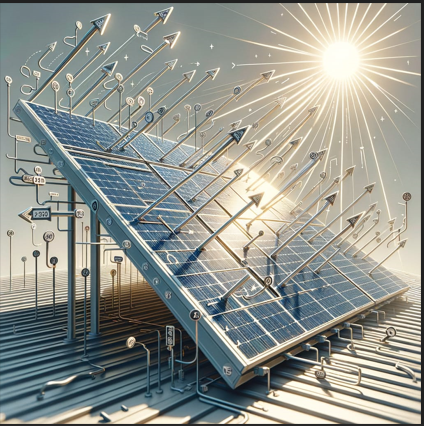
The sun changes position every single day and every season:
- In summer: The sun is high in the sky; panels should be flatter
- In winter: The sun is low on the horizon; panels should be steeper
- In spring/fall: The sun is in between; a medium angle works best
Miss the sun’s angle by 15 degrees = lose 10-15{176fcca6730a93a81d392d3d2de5285aaf114f6257de59f55b47dc4f356ad4a2} of energy that day.
Over a year, if your panels are at the wrong angle, you might lose 20-40{176fcca6730a93a81d392d3d2de5285aaf114f6257de59f55b47dc4f356ad4a2} of your total annual energy production. That’s like throwing away 1 out of every 3 panels’ worth of power.
The Simple Rule: Latitude-Based Tilt
Here’s the beautiful part: calculating your optimal tilt angle is simple – almost embarrassingly simple.
The Formula
Optimal Fixed Tilt Angle = Your Latitude (±5°)

Winter Angle = Latitude + 15°
Summer Angle = Latitude − 15°
Spring/Fall Angle = Latitude
That’s it. Seriously.
Real Example: Toronto
Toronto is at 43.7° latitude.
So:
- Fixed year-round angle: 44°
- Winter angle (Nov-Feb): 59°
- Summer angle (June-Aug): 29°
- Spring/Fall angle (Mar-May, Sep-Oct): 44°
You can find your latitude by searching “latitude of [your city]” on Google. Takes 10 seconds.
Why This Works
This formula is based on solar radiation geometry – the actual path the sun takes across your sky throughout the year. It’s used by:
- ✅ The National Renewable Energy Laboratory (NREL)
- ✅ Natural Resources Canada (NRCan)
- ✅ NASA’s POWER solar database
- ✅ Professional solar installers worldwide
- ✅ Government solar calculators
It’s not a guess. It’s physics. Below is some examples of month and recommended tilt angle.
| Month | Recommended Tilt Angle (Latitude-Based) |
|---|---|
| January | Latitude + 20° |
| February | Latitude + 15° |
| March | Latitude + 5° |
| April | Latitude − 5° |
| May | Latitude − 10° |
| June | Latitude − 15° |
| July | Latitude − 15° |
| August | Latitude − 10° |
| September | Latitude − 5° |
| October | Latitude + 5° |
| November | Latitude + 15° |
| December | Latitude + 20° |
Example for Toronto (Latitude 44°)
| Month | Tilt Angle |
|---|---|
| January | 64° |
| February | 59° |
| March | 49° |
| April | 39° |
| May | 34° |
| June | 29° |
| July | 29° |
| August | 34° |
| September | 39° |
| October | 49° |
| November | 59° |
| December | 64° |
Simple Tilt Angle Rule
- Fixed angle (all year): Latitude
- Winter angle: Latitude + 10° to 15°
- Summer angle: Latitude − 10° to 15°
This method is used by solar engineers and government solar tools.
The optimal solar panel tilt angle Canada installations use is usually based on latitude. This method is recommended by solar installers, universities, and government solar calculators. Using the correct tilt can increase annual energy production by 10{176fcca6730a93a81d392d3d2de5285aaf114f6257de59f55b47dc4f356ad4a2} to 25{176fcca6730a93a81d392d3d2de5285aaf114f6257de59f55b47dc4f356ad4a2} without adding more panels.
Scientific Research on Solar Panel Tilt Angle
Solar panel tilt recommendations are based on decades of research and solar radiation modeling.
- National Renewable Energy Laboratory (NREL) confirms latitude-based tilt angles maximize annual solar energy production.
- NASA POWER Data provides long-term solar irradiance data used in professional PV system design tools.
- Natural Resources Canada (NRCan) recommends adjusting tilt for winter in cold climates to improve low-sun capture and snow shedding.
Key Research Sources
- NREL: Best Practices for PV System Tilt and Orientation
- NASA POWER Project: Surface Meteorology and Solar Energy Database
- NRCan: Photovoltaic Systems in Canada Guide
Why Tilt Angle Matters More in Canada
Canada is not like Florida, California, or Arizona. Our solar situation is completely different – and that’s why tilt angle matters so much more here.
Reason 1: The Sun Gets REALLY Low in Winter
In southern Canada (Toronto, Vancouver, Calgary), the winter sun barely reaches 15-25° above the horizon. At noon on December 21st, the sun sits at just a 20° angle in Toronto.
Flat panels? They barely see the sun. The light hits at an extreme angle and just bounces off.
But a panel tilted to 59° faces the sun directly and captures maximum energy.
Real impact: A Toronto system with 29° tilt (summer angle) loses 35-40{176fcca6730a93a81d392d3d2de5285aaf114f6257de59f55b47dc4f356ad4a2} of its winter energy if left unchanged. Switching to 59° in winter adds it all back.
Reason 2: Snow Is a Massive Problem
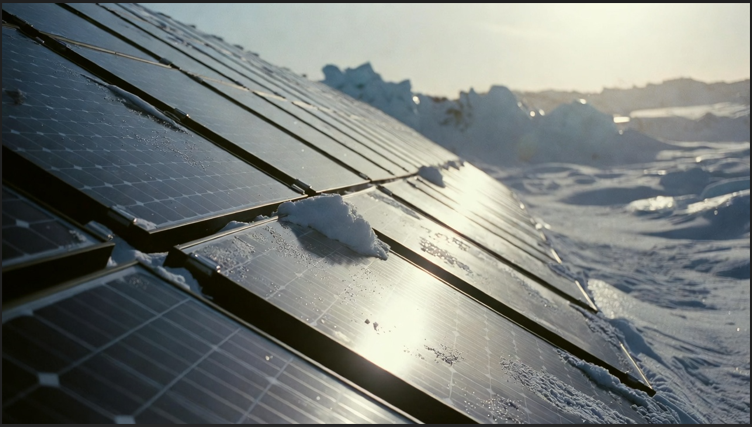
This is unique to Canada. Snow covers flat panels for weeks or months in winter – exactly when you need the power most.
Snow doesn’t slide off flat panels. It sits there. Your system produces zero power until:
- The sun gets hot enough to melt it (spring)
- You climb a ladder to brush it off manually
Steep panels (55-70°) shed snow naturally. Snow slides off within hours of the last flake, keeping your system producing power all winter.
For off-grid systems in remote areas (where you can’t climb on a snowy roof every week), this is the difference between comfort and rationing power.
Reason 3: Cold Weather = Better Solar Panel Efficiency
Here’s a counterintuitive fact: solar panels work BETTER in cold weather.
Most people think hot = better solar output. Wrong.
Solar panels lose about 0.5{176fcca6730a93a81d392d3d2de5285aaf114f6257de59f55b47dc4f356ad4a2} efficiency per degree Celsius above 25°C. So:
- Panel at 25°C: 100{176fcca6730a93a81d392d3d2de5285aaf114f6257de59f55b47dc4f356ad4a2} efficiency
- Panel at 35°C: 95{176fcca6730a93a81d392d3d2de5285aaf114f6257de59f55b47dc4f356ad4a2} efficiency
- Panel at 50°C: 97.5{176fcca6730a93a81d392d3d2de5285aaf114f6257de59f55b47dc4f356ad4a2} efficiency loss
Canada’s winter cold is actually an advantage. Your panels run cooler and more efficiently. If you can angle them to catch winter sun, you get maximum power.
Off-grid systems in winter need this efficiency boost badly.
Reason 4: Grid Electricity Prices & Off-Grid Freedom
Canadian electricity prices are rising 8-12{176fcca6730a93a81d392d3d2de5285aaf114f6257de59f55b47dc4f356ad4a2} annually. The payback period for solar improves with every increase.
But here’s the thing: off-grid systems need power most in winter, when grid power is needed for heating and lighting long nights. A properly tilted off-grid system captures maximum winter energy, reducing reliance on backup generators or diesel costs.
The math: A cabin that uses 40{176fcca6730a93a81d392d3d2de5285aaf114f6257de59f55b47dc4f356ad4a2} of its annual energy in winter can’t afford to lose 30{176fcca6730a93a81d392d3d2de5285aaf114f6257de59f55b47dc4f356ad4a2} of that winter production to poor tilt angle. That’s the difference between 4 days of autonomy and 3 days – a huge reliability difference.
Energy Gains: How Much More Power Can You Get?
This is the payoff question: How much extra energy does a better tilt angle actually give you?
Let me show you real numbers from solar radiation data.
Energy Gain Comparison: Toronto System
Assume a 5 kW system in Toronto, all year.
| Tilt Strategy | Annual Output | vs. Flat (0°) | vs. Fixed 44° |
|---|---|---|---|
| Flat (0°) | 5,200 kWh | Baseline | -15{176fcca6730a93a81d392d3d2de5285aaf114f6257de59f55b47dc4f356ad4a2} |
| Fixed 44° (latitude) | 6,100 kWh | +17{176fcca6730a93a81d392d3d2de5285aaf114f6257de59f55b47dc4f356ad4a2} | Baseline |
| Seasonal adjust (59°/44°/29°) | 6,850 kWh | +32{176fcca6730a93a81d392d3d2de5285aaf114f6257de59f55b47dc4f356ad4a2} | +12{176fcca6730a93a81d392d3d2de5285aaf114f6257de59f55b47dc4f356ad4a2} |
| Monthly optimize (64° to 29°) | 7,150 kWh | +37{176fcca6730a93a81d392d3d2de5285aaf114f6257de59f55b47dc4f356ad4a2} | +17{176fcca6730a93a81d392d3d2de5285aaf114f6257de59f55b47dc4f356ad4a2} |
| Solar tracker (follows sun) | 7,700 kWh | +48{176fcca6730a93a81d392d3d2de5285aaf114f6257de59f55b47dc4f356ad4a2} | +26{176fcca6730a93a81d392d3d2de5285aaf114f6257de59f55b47dc4f356ad4a2} |
Month-by-Month Gains: Seasonal Adjustment in Toronto
| Month | Fixed 44° | Seasonal (59°/44°/29°) | Difference |
|---|---|---|---|
| January | 380 kWh | 520 kWh | +37{176fcca6730a93a81d392d3d2de5285aaf114f6257de59f55b47dc4f356ad4a2} |
| February | 450 kWh | 580 kWh | +29{176fcca6730a93a81d392d3d2de5285aaf114f6257de59f55b47dc4f356ad4a2} |
| March | 520 kWh | 560 kWh | +8{176fcca6730a93a81d392d3d2de5285aaf114f6257de59f55b47dc4f356ad4a2} |
| April | 550 kWh | 540 kWh | -2{176fcca6730a93a81d392d3d2de5285aaf114f6257de59f55b47dc4f356ad4a2} |
| May | 600 kWh | 580 kWh | -3{176fcca6730a93a81d392d3d2de5285aaf114f6257de59f55b47dc4f356ad4a2} |
| June | 620 kWh | 580 kWh | -6{176fcca6730a93a81d392d3d2de5285aaf114f6257de59f55b47dc4f356ad4a2} |
| July | 630 kWh | 590 kWh | -6{176fcca6730a93a81d392d3d2de5285aaf114f6257de59f55b47dc4f356ad4a2} |
| August | 610 kWh | 600 kWh | -2{176fcca6730a93a81d392d3d2de5285aaf114f6257de59f55b47dc4f356ad4a2} |
| September | 560 kWh | 570 kWh | +2{176fcca6730a93a81d392d3d2de5285aaf114f6257de59f55b47dc4f356ad4a2} |
| October | 500 kWh | 540 kWh | +8{176fcca6730a93a81d392d3d2de5285aaf114f6257de59f55b47dc4f356ad4a2} |
| November | 380 kWh | 520 kWh | +37{176fcca6730a93a81d392d3d2de5285aaf114f6257de59f55b47dc4f356ad4a2} |
| December | 320 kWh | 470 kWh | +47{176fcca6730a93a81d392d3d2de5285aaf114f6257de59f55b47dc4f356ad4a2} |
| ANNUAL | 6,100 kWh | 6,850 kWh | +12.3{176fcca6730a93a81d392d3d2de5285aaf114f6257de59f55b47dc4f356ad4a2} |
Key Insight
Seasonal adjustments add almost 800 kWh annually to a Toronto system. That’s worth $80-160/year in avoided grid electricity or generator fuel.
Over 25 years, that’s $2,000-$4,000 in extra energy – for zero additional panel cost.
Why Winter Matters Most
Notice January-February and November-December show 30-47{176fcca6730a93a81d392d3d2de5285aaf114f6257de59f55b47dc4f356ad4a2} gains with seasonal adjustment. That’s because:
- Winter sun is so low that latitude angle misses it
- Steeper angles capture low sun much better
- Winter is short and valuable – every bit counts
For off-grid systems, this winter energy boost is critical for survival and comfort.
Optimal Tilt Angles by Canadian City
Here are the exact angles for every major Canadian city.
🔷 Ontario
| City | Latitude | Fixed | Winter | Summer | Spring/Fall |
|---|---|---|---|---|---|
| Toronto | 43.7° | 44° | 59° | 29° | 44° |
| Ottawa | 45.4° | 45° | 60° | 30° | 45° |
| Mississauga | 43.6° | 44° | 59° | 29° | 44° |
| Hamilton | 43.3° | 43° | 58° | 28° | 43° |
| London | 42.9° | 43° | 58° | 28° | 43° |
| Windsor | 42.3° | 42° | 57° | 27° | 42° |
| Thunder Bay | 48.4° | 48° | 63° | 33° | 48° |
🔷 British Columbia
| City | Latitude | Fixed | Winter | Summer | Spring/Fall |
|---|---|---|---|---|---|
| Vancouver | 49.3° | 49° | 64° | 34° | 49° |
| Victoria | 48.4° | 48° | 63° | 33° | 48° |
| Kelowna | 50.1° | 50° | 65° | 35° | 50° |
| Kamloops | 50.1° | 50° | 65° | 35° | 50° |
| Prince Rupert | 54.3° | 54° | 69° | 39° | 54° |
🔷 Alberta
| City | Latitude | Fixed | Winter | Summer | Spring/Fall |
|---|---|---|---|---|---|
| Calgary | 51.0° | 51° | 66° | 36° | 51° |
| Edmonton | 53.5° | 54° | 69° | 39° | 54° |
| Red Deer | 52.3° | 52° | 67° | 37° | 52° |
| Fort McMurray | 56.7° | 57° | 72° | 42° | 57° |
| Lethbridge | 49.7° | 50° | 65° | 35° | 50° |
🔷 Saskatchewan
| City | Latitude | Fixed | Winter | Summer | Spring/Fall |
|---|---|---|---|---|---|
| Regina | 50.4° | 50° | 65° | 35° | 50° |
| Saskatoon | 52.1° | 52° | 67° | 37° | 52° |
| Prince Albert | 53.2° | 53° | 68° | 38° | 53° |
🔷 Manitoba
| City | Latitude | Fixed | Winter | Summer | Spring/Fall |
|---|---|---|---|---|---|
| Winnipeg | 49.9° | 50° | 65° | 35° | 50° |
| Brandon | 49.7° | 50° | 65° | 35° | 50° |
🔷 Quebec
| City | Latitude | Fixed | Winter | Summer | Spring/Fall |
|---|---|---|---|---|---|
| Montreal | 46.8° | 47° | 62° | 32° | 47° |
| Quebec City | 46.8° | 47° | 62° | 32° | 47° |
| Gatineau | 45.4° | 45° | 60° | 30° | 45° |
| Sherbrooke | 45.4° | 45° | 60° | 30° | 45° |
🔷 Atlantic Canada
| City | Latitude | Fixed | Winter | Summer | Spring/Fall |
|---|---|---|---|---|---|
| Halifax (NS) | 45.0° | 45° | 60° | 30° | 45° |
| Saint John (NB) | 45.3° | 45° | 60° | 30° | 45° |
| St. John’s (NL) | 47.6° | 48° | 63° | 33° | 48° |
| Moncton (NB) | 46.1° | 46° | 61° | 31° | 46° |
| Charlottetown (PE) | 46.2° | 46° | 61° | 31° | 46° |
🔷 Northern Canada
| City | Latitude | Fixed | Winter | Summer | Spring/Fall |
|---|---|---|---|---|---|
| Whitehorse (YT) | 61.2° | 61° | 76° | 46° | 61° |
| Yellowknife (NWT) | 62.4° | 62° | 77° | 47° | 62° |
| Iqaluit (NU) | 63.8° | 64° | 79° | 49° | 64° |
| Inuvik (NWT) | 68.4° | 68° | 83° | 53° | 68° |
Optimal Tilt Angles: USA, Australia & Europe
If you’re not in Canada, here are the same calculations for major cities worldwide.
🗽 United States
| City | Latitude | Fixed | Winter | Summer |
|---|---|---|---|---|
| Miami, FL | 25.8° | 26° | 41° | 11° |
| Los Angeles, CA | 34.1° | 34° | 49° | 19° |
| Phoenix, AZ | 33.4° | 33° | 48° | 18° |
| Denver, CO | 39.7° | 40° | 55° | 25° |
| Dallas, TX | 32.8° | 33° | 48° | 18° |
| Chicago, IL | 41.9° | 42° | 57° | 27° |
| New York, NY | 40.7° | 41° | 56° | 26° |
| Boston, MA | 42.4° | 42° | 57° | 27° |
| Seattle, WA | 47.6° | 48° | 63° | 33° |
| Minneapolis, MN | 44.9° | 45° | 60° | 30° |
🇦🇺 Australia
| City | Latitude | Fixed | Winter | Summer |
|---|---|---|---|---|
| Sydney, NSW | 33.9° | 34° | 19° | 49° |
| Melbourne, VIC | 37.8° | 38° | 23° | 53° |
| Brisbane, QLD | 27.5° | 28° | 13° | 43° |
| Perth, WA | 32.0° | 32° | 17° | 47° |
| Adelaide, SA | 34.9° | 35° | 20° | 50° |
Note: Australia is in the Southern Hemisphere, so winter and summer angles are reversed.
🇬🇧 🇩🇪 🇫🇷 Europe
| City | Country | Latitude | Fixed | Winter | Summer |
|---|---|---|---|---|---|
| London | UK | 51.5° | 52° | 67° | 37° |
| Berlin | Germany | 52.5° | 53° | 68° | 38° |
| Paris | France | 48.9° | 49° | 64° | 34° |
| Amsterdam | Netherlands | 52.4° | 52° | 67° | 37° |
| Oslo | Norway | 59.9° | 60° | 75° | 45° |
| Stockholm | Sweden | 59.3° | 59° | 74° | 44° |
| Madrid | Spain | 40.4° | 40° | 55° | 25° |
| Rome | Italy | 41.9° | 42° | 57° | 27° |
| Athens | Greece | 38.0° | 38° | 53° | 23° |
Key Difference: Latitude Matters Everywhere
Notice that warmer places (Miami, Los Angeles) have lower optimal angles, while colder places (Whitehorse, northern Europe) have much steeper angles.
This is because steeper angles capture low sun better – which matters for winter-dominant energy needs.
Seasonal Adjustment Strategy
The big question: Should you actually adjust your panels seasonally?
The Options
Option 1: Fixed Angle (Set Once, Never Change)
Setup:
- Install panels at latitude angle
- Leave them fixed all year
Pros:
- ✅ Zero maintenance
- ✅ No adjustment cost
- ✅ Works great for rooftop systems
Cons:
- ❌ Misses 10-15{176fcca6730a93a81d392d3d2de5285aaf114f6257de59f55b47dc4f356ad4a2} of seasonal energy gains
- ❌ Winter performance isn’t optimized
Best for: Homeowners who want simplicity and don’t mind losing some winter energy
Real example: Toronto home with 44° fixed angle captures 6,100 kWh annually
Option 2: Seasonal Adjustments (Change Twice Per Year)
Setup:
- Winter (Nov-Feb): High angle (59° for Toronto)
- Spring/Fall (Mar-May, Sep-Oct): Latitude angle (44°)
- Summer (Jun-Aug): Low angle (29°)
Pros:
- ✅ Adds 10-15{176fcca6730a93a81d392d3d2de5285aaf114f6257de59f55b47dc4f356ad4a2} annual energy
- ✅ Great winter boost (30-40{176fcca6730a93a81d392d3d2de5285aaf114f6257de59f55b47dc4f356ad4a2} more in Dec-Jan)
- ✅ Easy on ground or adjustable mounts
Cons:
- ❌ Requires 2-3 adjustments per year
- ❌ Not practical for most rooftop systems
- ❌ Manual effort (unless motor-driven)
Best for: Off-grid cabins, ground-mounted systems, people who want maximum winter reliability
Real example: Toronto system with 59°/44°/29° angles captures 6,850 kWh annually (+12{176fcca6730a93a81d392d3d2de5285aaf114f6257de59f55b47dc4f356ad4a2})
Option 3: Monthly Optimization (Fine-Tuned Every Month)
Setup:
- Adjust angle every month to follow sun’s path
- Uses 12 different angles (64°, 59°, 49°, 39°, 34°, 29°, 29°, 34°, 39°, 49°, 59°, 64°)
Pros:
- ✅ Captures 15-20{176fcca6730a93a81d392d3d2de5285aaf114f6257de59f55b47dc4f356ad4a2} more annual energy
- ✅ Maximum winter performance
- ✅ Smoothest energy curve throughout year
Cons:
- ❌ Monthly manual adjustments (labor-intensive)
- ❌ Best for motorized/tracking systems only
- ❌ Cost vs. benefit analysis needed
Best for: Professional installations, farms, commercial systems where ROI justifies the effort
Real example: Toronto system with monthly optimization captures 7,150 kWh annually (+17{176fcca6730a93a81d392d3d2de5285aaf114f6257de59f55b47dc4f356ad4a2} vs. fixed)
Option 4: Solar Trackers (Automatic Following)
Setup:
- Single-axis or dual-axis tracker that follows sun automatically
- Motor + controller system
Pros:
- ✅ Maximum energy capture (25-40{176fcca6730a93a81d392d3d2de5285aaf114f6257de59f55b47dc4f356ad4a2} more than fixed)
- ✅ Zero manual adjustment
- ✅ Great for large commercial systems
Cons:
- ❌ Very expensive ($3,000-$8,000+)
- ❌ More moving parts = more maintenance
- ❌ Long payback period
Best for: Large farms, utility-scale systems, locations with high electricity rates
Real example: Toronto 5 kW system with dual-axis tracker captures 7,700 kWh annually (+26{176fcca6730a93a81d392d3d2de5285aaf114f6257de59f55b47dc4f356ad4a2} vs. fixed)
Decision Matrix: Which Option Is Right for You?
| Your Situation | Recommendation | Why |
|---|---|---|
| Rooftop home system, grid-connected | Fixed angle | Simplicity wins; you have grid backup |
| Off-grid cabin, reliable power matters | Seasonal (59°/44°/29°) | Winter energy boost is critical; 2x adjustment is doable |
| Farm or commercial system | Monthly or tracker | ROI justifies the labor and equipment cost |
| Large utility-scale | Dual-axis tracker | Maximum energy = maximum revenue |
| RV/van solar | Seasonal (easy adjustments) | Flexible mounting; worth the effort |
Fixed vs. Adjustable vs. Tracking Systems
The mounting system you choose determines whether you CAN adjust seasonally.
Fixed Roof Mounts
Description: Panels bolted directly to roof at one fixed angle
Best angle: Latitude (44° for Toronto)
Pros:
- Cheapest installation
- No moving parts
- Clean look
- Survives high winds/snow loads
Cons:
- Can’t adjust seasonally
- Misses seasonal energy gains
- Summer overheating possible
Cost: $500-$1,500 for installation
Best for: Grid-connected homes, renters, simplicity-first builders
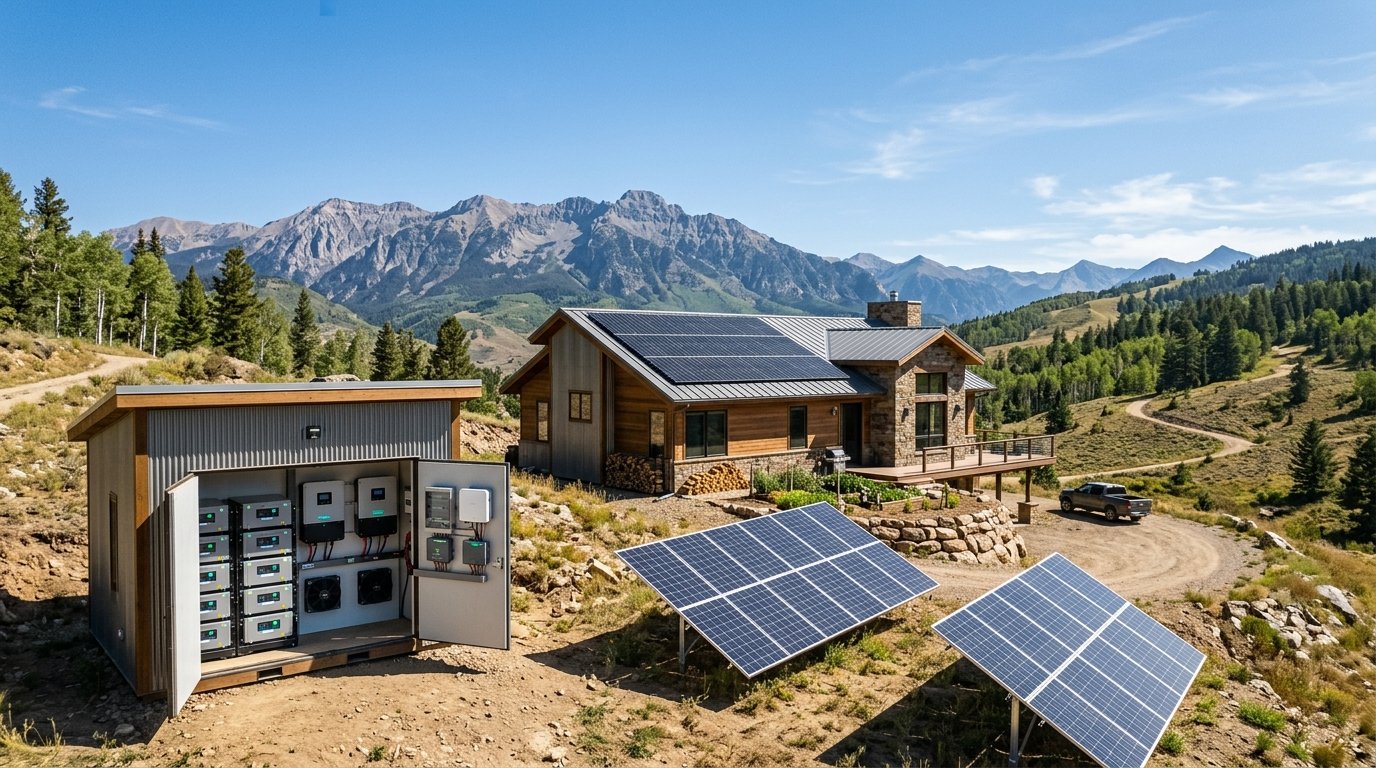
Ground-Mounted Adjustable Racks
Description: Panels on ground-level frame with manual adjustment mechanism
Best angles: Seasonal (59°/44°/29° for Toronto)
Pros:
- ✅ Easy seasonal adjustments (5-10 minutes each)
- ✅ Captures seasonal energy gains (+12{176fcca6730a93a81d392d3d2de5285aaf114f6257de59f55b47dc4f356ad4a2})
- ✅ Snow slides off steep winter angle
- ✅ Better cooling (air under panels)
Cons:
- ❌ Takes up ground space
- ❌ Requires manual adjustment twice/year
- ❌ More expensive than roof mounts
Cost: $2,000-$4,000 for installation
Best for: Off-grid cabins, remote properties, people who value winter energy
Single-Axis Trackers
Description: Panels rotate on one axis (east-west), following sun’s path
Characteristics:
- Moves throughout the day
- Optimizes for varying sun height
Pros:
- Captures 20-30{176fcca6730a93a81d392d3d2de5285aaf114f6257de59f55b47dc4f356ad4a2} more energy than fixed
- Less complex than dual-axis
Cons:
- Mechanical complexity
- Annual maintenance needed
- Cost $5,000-$8,000
Best for: Commercial installations, farms with high electricity costs
Dual-Axis Trackers
Description: Panels move in two directions (east-west AND up-down), tracking the sun
Characteristics:
- Follows sun’s exact position throughout the day and year
- Optimal angle at all times
Pros:
- Maximum energy capture (+25-40{176fcca6730a93a81d392d3d2de5285aaf114f6257de59f55b47dc4f356ad4a2})
- Best performance possible
Cons:
- Very expensive ($8,000-$15,000+)
- Most moving parts = highest maintenance
- Requires flat open space
Best for: Large commercial systems, utility-scale installations
Orientation: South, East, West or North?
Assuming you’ve chosen your tilt angle, which direction should your panels FACE?
The Simple Answer
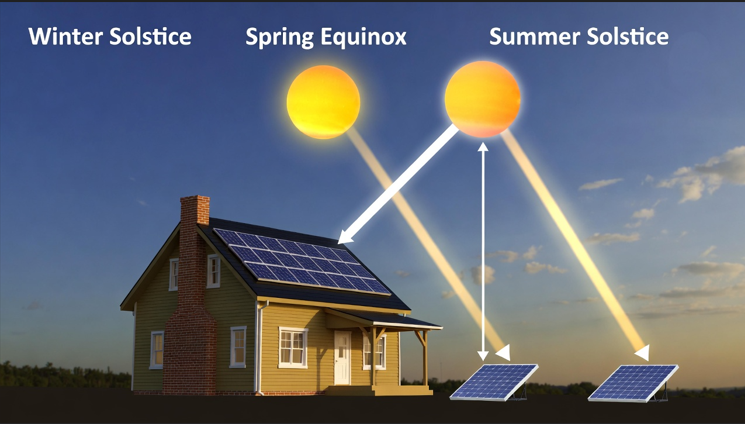
👉 South-facing is best.
The sun travels south across the sky (in the Northern Hemisphere), so south-facing panels see maximum sun.
Performance by Direction
| Direction | Relative Output | Best For |
|---|---|---|
| South | 100{176fcca6730a93a81d392d3d2de5285aaf114f6257de59f55b47dc4f356ad4a2} | Standard; best choice |
| Southeast | 90-95{176fcca6730a93a81d392d3d2de5285aaf114f6257de59f55b47dc4f356ad4a2} | Morning power priority |
| Southwest | 90-95{176fcca6730a93a81d392d3d2de5285aaf114f6257de59f55b47dc4f356ad4a2} | Afternoon power priority |
| East | 80-85{176fcca6730a93a81d392d3d2de5285aaf114f6257de59f55b47dc4f356ad4a2} | Morning power, lower output |
| West | 80-85{176fcca6730a93a81d392d3d2de5285aaf114f6257de59f55b47dc4f356ad4a2} | Afternoon power, lower output |
| Northeast/Northwest | 60-70{176fcca6730a93a81d392d3d2de5285aaf114f6257de59f55b47dc4f356ad4a2} | Not recommended; too much loss |
| North | 10-20{176fcca6730a93a81d392d3d2de5285aaf114f6257de59f55b47dc4f356ad4a2} | Do not use |
Real Example: Toronto Off-Grid Cabin
| Orientation | Annual Output | Best Use Case |
|---|---|---|
| South-facing 44° | 6,100 kWh | Standard choice |
| Southeast 44° | 5,700 kWh | Wants morning power peak |
| Southwest 44° | 5,800 kWh | Wants afternoon power peak |
| East 44° | 5,200 kWh | Not recommended |
| West 44° | 5,100 kWh | Not recommended |
When Non-South Orientations Make Sense
Southeast/Southwest: If your roof only faces east or west, these orientations capture enough energy (85{176fcca6730a93a81d392d3d2de5285aaf114f6257de59f55b47dc4f356ad4a2}+). Don’t let perfect be the enemy of good.
Dual systems: Some people install panels on both south and east walls to capture morning and evening. Total output might be similar to south-only, but energy flow is smoothed throughout the day.
Load matching: If your heaviest use is in the morning (pumping water, charging batteries), east-facing might be worth the 10-15{176fcca6730a93a81d392d3d2de5285aaf114f6257de59f55b47dc4f356ad4a2} energy loss.
Snow Shedding & Winter Performance
This is where tilt angle becomes absolutely critical in Canada.
The Snow Problem
Snow covers solar panels and blocks 90-100{176fcca6730a93a81d392d3d2de5285aaf114f6257de59f55b47dc4f356ad4a2} of sunlight. In a severe snow season, you might lose 2-4 weeks of power if panels remain covered.
For off-grid systems, that’s a catastrophe.
How Tilt Angle Affects Snow
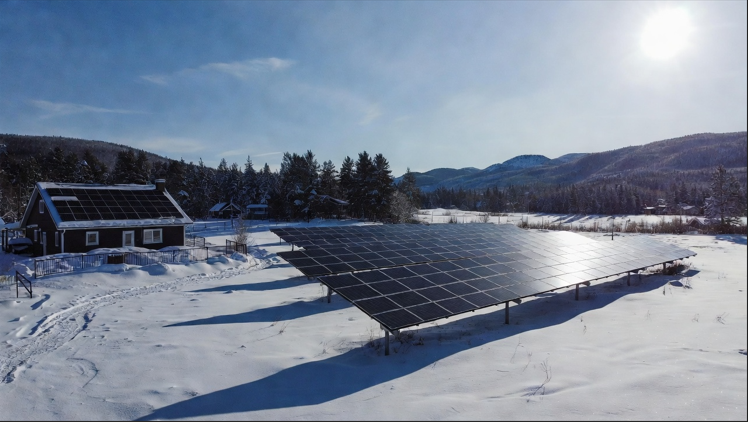
Flat Panels (0-20° Tilt)
Snow behavior: Accumulates and stays
Why: Low angle means low gravitational force pulling snow down. Snow sticks until warm enough to melt (spring).
Real impact: A flat 5 kW system in Calgary might lose 30-50{176fcca6730a93a81d392d3d2de5285aaf114f6257de59f55b47dc4f356ad4a2} of winter energy in a snowy year.
Medium Angle (30-45° Tilt)
Snow behavior: Slow shedding (days to weeks)
Why: Some gravitational force, but not enough for immediate shedding.
Real impact: Snow might slide after 2-5 days once sun hits it.
Steep Angle (55-75° Tilt)
Snow behavior: Rapid shedding (hours to 1 day)
Why: Gravity strongly pulls snow down and off. Minimal friction on steep surface.
Real impact: Fresh snow slides within hours of the next sunny day.
Winter Angle Strategy for Canada
Best winter angles by region:
- Southern Canada (Toronto, Calgary): 55-65° (latitude + 15°)
- Central Canada (Winnipeg, Edmonton): 65-70° (latitude + 15-20°)
- Northern Canada (Whitehorse, Yellowknife): 75-80° (latitude + 20°)
These steep angles optimize both winter energy capture AND snow shedding.
Additional Snow Management
Even with a steep angle, heavy snow can stick temporarily. Tips:
- ✅ Ground-mounted systems are easier to clear than rooftop
- ✅ A long pole brush ($30-50) clears snow safely from ground
- ✅ Some people install heated roof elements (expensive but automatic)
- ✅ Darker panels absorb more heat and shed snow faster
Common Mistakes Canadians Make
Mistake #1: Leaving Panels Flat to Look Clean
The error: Someone mounts panels flat (0-10°) because they think it looks neat and easier to clean.
The cost: Losing 25-35{176fcca6730a93a81d392d3d2de5285aaf114f6257de59f55b47dc4f356ad4a2} of winter energy when you need it most.
The fix: Use latitude angle (44° Toronto). Yes, it looks more tilted, but the energy gain is massive.
Real impact: Flat panels in Toronto: 5,200 kWh/year. Latitude-tilted: 6,100 kWh/year. 900 kWh difference = $90-180/year.
Mistake #2: Copying US Solar Guides
The error: Using angles from US websites (often 20-30°) without adjusting for Canada’s higher latitude.
Why it’s wrong: Southern US has higher sun angles in winter. The same angle in Canada misses winter sun.
The fix: Use latitude-based formula, not a generic “install at 30°” rule.
Real impact: Using 30° in Toronto loses 25-30{176fcca6730a93a81d392d3d2de5285aaf114f6257de59f55b47dc4f356ad4a2} of winter energy vs. 59° winter angle.
Mistake #3: Ignoring Shade from Trees & Buildings
The error: Installing panels without checking for winter shade. Trees are leafless and lower sun means longer shadows.
Why it matters: Even partial shade (25{176fcca6730a93a81d392d3d2de5285aaf114f6257de59f55b47dc4f356ad4a2} coverage) reduces output 50{176fcca6730a93a81d392d3d2de5285aaf114f6257de59f55b47dc4f356ad4a2}. A tree shadow you don’t notice in summer might block winter sun for 4 months.
The fix: Check winter sun path on-site (use NOAA’s online tool or SunCalc.org).
Real impact: Hidden winter shade can cost 30-50{176fcca6730a93a81d392d3d2de5285aaf114f6257de59f55b47dc4f356ad4a2} of winter energy – more expensive than buying extra panels.
Mistake #4: Never Adjusting for Roof Slope Mismatch
The error: Roof slopes south at 30°. You want 44° tilt. You give up and install at 30°, thinking “close enough.”
Why it’s wrong: 14° difference loses 10-15{176fcca6730a93a81d392d3d2de5285aaf114f6257de59f55b47dc4f356ad4a2} of energy.
The fix: Use adjustable mounts or tilted rails (add 15° to roof slope).
Real impact: 5{176fcca6730a93a81d392d3d2de5285aaf114f6257de59f55b47dc4f356ad4a2} energy loss on a 5 kW system = 310 kWh/year = $31-62/year forever.
Mistake #5: Setting Winter Angle Too Early/Late
The error: Switching to winter angle (59°) in October when autumn (44°) is still optimal.
Why it’s wrong: Wastes solar energy capture in Oct-Nov.
The fix: Adjust to winter angle November 1 at the earliest.
Real impact: Slight, but adjusting on schedule optimizes the year.
Mistake #6: Assuming “Good Enough” Tilt Is Acceptable for Off-Grid
The error: Off-grid installer uses fixed 44° for a remote cabin because it’s convenient, ignoring winter needs.
Why it’s wrong: Off-grid systems can’t fall back to grid power. Winter energy is survival-critical.
The fix: Prioritize winter angle (59°) for off-grid systems. Manual adjustment is worth the effort.
Real impact: Difference between 3 days of autonomy (44°) and 4+ days (59°) in winter. That’s reliability.
FAQ: Solar Panel Tilt Angle
Q1: What is the best solar panel tilt angle for Canada?
A: The best angle for your location is approximately your latitude, adjusted for season:
- Fixed all year: Your latitude (e.g., 44° for Toronto)
- Winter (Nov-Feb): Latitude + 15° (59° for Toronto)
- Summer (Jun-Aug): Latitude − 15° (29° for Toronto)
This maximizes annual energy production. Use the interactive calculator above to find your exact angles.
Q2: Should I adjust my panels every season, or keep them fixed?
A: Depends on your situation:
- Grid-connected home: Fixed angle is fine (simplicity wins)
- Off-grid cabin: Seasonal adjustments are worth it (+10-15{176fcca6730a93a81d392d3d2de5285aaf114f6257de59f55b47dc4f356ad4a2} winter energy)
- Commercial/farm: Consider monthly adjustments or trackers (ROI justifies cost)
For off-grid systems, the winter energy boost is often critical for reliability.
Q3: How much more energy do seasonal adjustments actually provide?
A: Real data from Toronto:
- Fixed 44° angle: 6,100 kWh annually
- Seasonal adjustments (59°/44°/29°): 6,850 kWh annually
- Difference: +750 kWh/year = +12.3{176fcca6730a93a81d392d3d2de5285aaf114f6257de59f55b47dc4f356ad4a2}
Monthly optimization adds another 5{176fcca6730a93a81d392d3d2de5285aaf114f6257de59f55b47dc4f356ad4a2} on top of that.
Q4: Does panel tilt angle matter for hybrid systems (with battery + generator backup)?
A: Yes, even more so. Hybrid systems rely on solar to charge batteries. Poor tilt angle means the battery stays low and the generator runs more often, burning fuel.
Optimized tilt means:
- More solar charging
- Lower generator runtime
- Less fuel costs
This compounds over years.
Q5: What if my roof only faces northeast or northwest?
A: You have three options:
- Accept the loss: Northeast/northwest captures 60-70{176fcca6730a93a81d392d3d2de5285aaf114f6257de59f55b47dc4f356ad4a2} of optimal output. Still viable, but not ideal.
- Ground mount: Install panels on the ground facing south at optimal angle. Takes space but maximizes energy.
- Dual system: Install panels on south wall (if possible) to supplement.
Real impact: Northeast roof loses 30-40{176fcca6730a93a81d392d3d2de5285aaf114f6257de59f55b47dc4f356ad4a2} vs. south-facing, but it’s still better than nothing.
Q6: Is it worth installing a solar tracker to follow the sun automatically?
A: Depends on system size and electricity rates:
Worth it if:
- ✅ System is 10+ kW
- ✅ Local electricity rates are $0.20+/kWh
- ✅ Commercial/farm installation
- ✅ Payback period < 5 years
Not worth it if:
- ❌ System is <5 kW
- ❌ Grid-connected with net metering
- ❌ Maintenance costs are high in your area
For most homeowners: Fixed or seasonal adjustment is the sweet spot.
Q7: How often should I clean my panels, and does tilt angle affect cleaning?
A: Clean 1-2 times per year (more if dusty/dirty climate).
Tilt angle effect:
- Steep angles (55-70°): Rain naturally cleans; less manual cleaning needed
- Flat angles (0-30°): Rain doesn’t clean well; requires more frequent manual cleaning
This is another reason steep winter angles are good for Canadian climates.
Q8: Can I use a steeper angle to improve snow shedding without losing energy?
A: Yes – but with limits. Winter angles in Canada (55-70°) are steep enough for both energy AND snow shedding.
Steeper than 75°: Snow sheds great, but you lose summer energy (might not be worth it).
Optimal sweet spot: 59-66° for most Canadian locations (latitude + 15°).
Q9: What if my actual roof slope doesn’t match the optimal tilt angle?
A: Use tilted mounting rails to adjust:
- Roof slopes south at 20°, optimal is 44°: Add 24° tilt via rails (common solution)
- Cost: $500-$1,500 for tilted rails
- Worth it: Yes, if you’re capturing 15-20{176fcca6730a93a81d392d3d2de5285aaf114f6257de59f55b47dc4f356ad4a2} more energy
Alternatively, ground mount the panels to choose any angle.
Q10: How long do seasonal adjustments take, and is it safe?
A:
Time: 5-10 minutes for typical system
Safety:
- ✅ Ground mounts: Very safe (can reach from ground)
- ⚠️ Rooftop systems: Requires climbing (safety risk, not recommended)
- ❌ Do NOT adjust rooftop panels yourself if you’re uncomfortable with heights
Best practice: If your system is rooftop, hire a professional for seasonal adjustments (costs $100-200 per adjustment, worth the safety).
Conclusion & Next Steps
Here’s what you now know:
✅ Your optimal tilt angle is simple to calculate (it’s basically your latitude)
✅ Seasonal adjustments add 10-15{176fcca6730a93a81d392d3d2de5285aaf114f6257de59f55b47dc4f356ad4a2} annual energy – especially valuable in winter
✅ Winter angles (55-70° in most of Canada) serve dual purposes: capturing low winter sun AND shedding snow automatically
✅ Off-grid systems benefit most from proper tilt because winter energy reliability is critical
✅ Real energy gains range from +15{176fcca6730a93a81d392d3d2de5285aaf114f6257de59f55b47dc4f356ad4a2} (fixed vs. flat) to +30{176fcca6730a93a81d392d3d2de5285aaf114f6257de59f55b47dc4f356ad4a2} (monthly optimization)
Your Next Step: Get Your Exact Angles
You have two options:
Option 1: Use the calculator above
- Select your Canadian city or enter latitude
- Choose your mounting strategy (fixed/seasonal/monthly)
- Copy your angles and apply them
Option 2: Get a professional assessment
- Contact a local solar installer
- They’ll assess your roof, shade, and microclimates
- Factor in your specific situation (off-grid vs. grid-tied, energy priorities, etc.)
For Off-Grid Systems Specifically
If you’re building an off-grid cabin or remote system, I strongly recommend:
- Use winter angles (latitude + 15°) – the energy boost in winter is non-negotiable
- Ground mount if possible – easy seasonal adjustments + snow shedding
- Prioritize winter autonomy – size batteries for 4-5 days assuming worst-case winter PSH
A cabin with proper winter tilt and battery sizing will run comfortably year-round. A cabin with generic “latitude angle” and undersized batteries will struggle every winter.
Related Articles You’ll Find Useful
- Off-Grid Solar System Design Tool: Complete Sizing & Installation Guide 2026 – Learn how tilt angle fits into overall system design
- Off-Grid Solar System Cost 2026: Complete Sizing Guide – Budget planning when accounting for proper mounting
- How to Calculate Solar Needs for Home: Step-by-Step Guide – Energy consumption (feeds into tilt optimization)
- Home Solar Battery Calculator 2026 – Battery sizing impacts from seasonal energy variations
Summary: Key Tilt Angles for Quick Reference
Remember these three numbers for your location:
📌 FIND YOUR LATITUDE (e.g., Toronto = 43.7°)

→ Fixed Angle = Your Latitude (44°)
→ Winter Angle = Latitude + 15° (59°)
→ Summer Angle = Latitude − 15° (29°)

→ Expected Energy Gains:
   • Fixed (vs. flat): +15-20{176fcca6730a93a81d392d3d2de5285aaf114f6257de59f55b47dc4f356ad4a2}
   • Seasonal (vs. fixed): +10-15{176fcca6730a93a81d392d3d2de5285aaf114f6257de59f55b47dc4f356ad4a2}
   • Monthly optimization: +5-10{176fcca6730a93a81d392d3d2de5285aaf114f6257de59f55b47dc4f356ad4a2} more
Use the interactive calculator above to get exact angles for your city.
In winter, the sun sits very low on the horizon. Flat panels barely see the sun. A steep angle lets panels face the sun directly.
How to Calculate the Best Solar Panel Tilt Angle
You only need one number: your latitude.
You can find it by searching:
👉 “Latitude of Toronto” (or your city)
Example: Toronto
- Latitude: ~43.7°
So:
- Fixed tilt: 44°
- Winter tilt: 59°
- Summer tilt: 29°
That’s it.
🇨🇦 Canada Solar Panel Tilt Angle Calculator
Select your city or enter latitude to calculate fixed, seasonal, and monthly tilt angles.
If you want more calculations and full projections then please visit HERE
© 2026 OffGridCalc. All rights reserved.
Disclaimer: This article is for educational purposes. Actual optimal angles may vary based on local shade, roof pitch, microclimates, and building code requirements. Consult a certified solar professional for final installation decisions.
Contact: contact@offgridsolarcalc.com